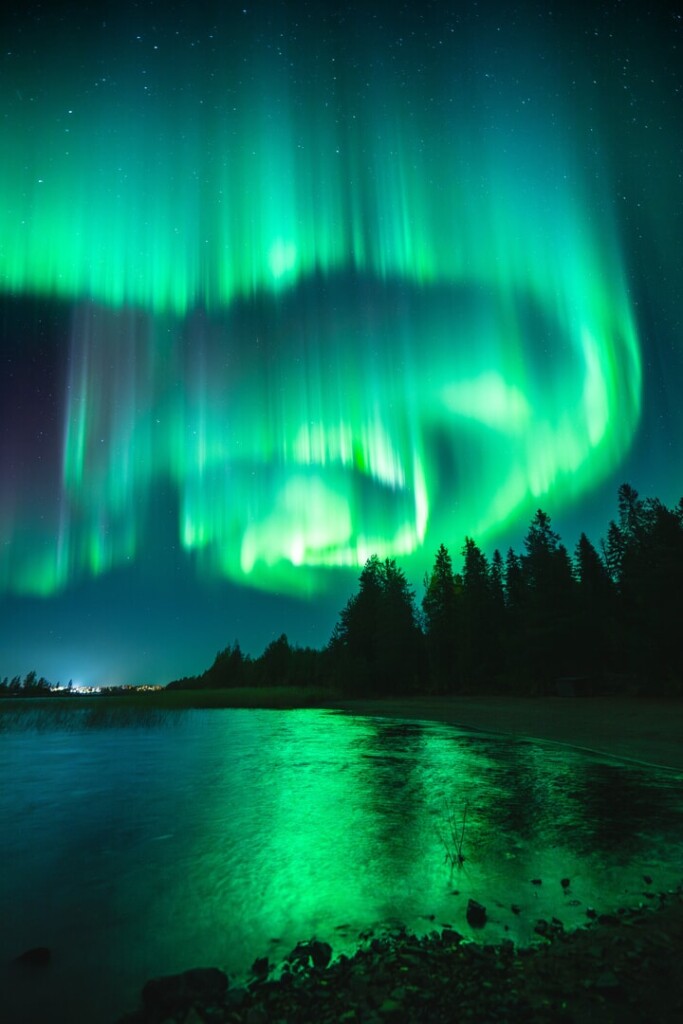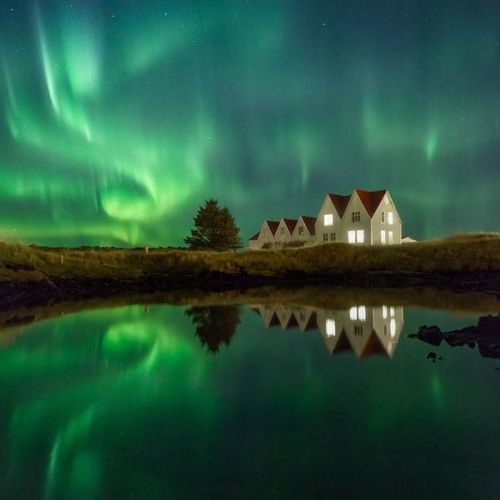
The 2025 Northern Lights photographer of the year
Photographing the Northern Lights is an unforgettable spectacle.
There are few experiences as moving as standing under an active aurora, watching ribbons of light ripple and twist across the sky. When the Northern Lights come alive, mountains, coastlines, lakes, and remote plains are transformed into surreal nightscapes.
In 2025, the Aurora continued to surprise us with some of the most intense displays of the current solar cycle. Although solar maximum has now peaked, geomagnetic activity has remained exceptionally strong, with storms lighting up the skies far beyond the polar regions and reaching places where the Aurora Borealis & Australis are rarely seen.
To inspire your next adventure, the 8th edition of The Northern Lights Photographer of the Year brings together the 25 most extraordinary aurora images captured around the world over the past year.
Prepare to embark on a journey that will take you from Arctic fjords to Antarctic latitudes; from volcanic coastlines and glacial lagoons to forests, mountains, and remote islands where both the Aurora Borealis and Australis illuminated the night in all their glory.
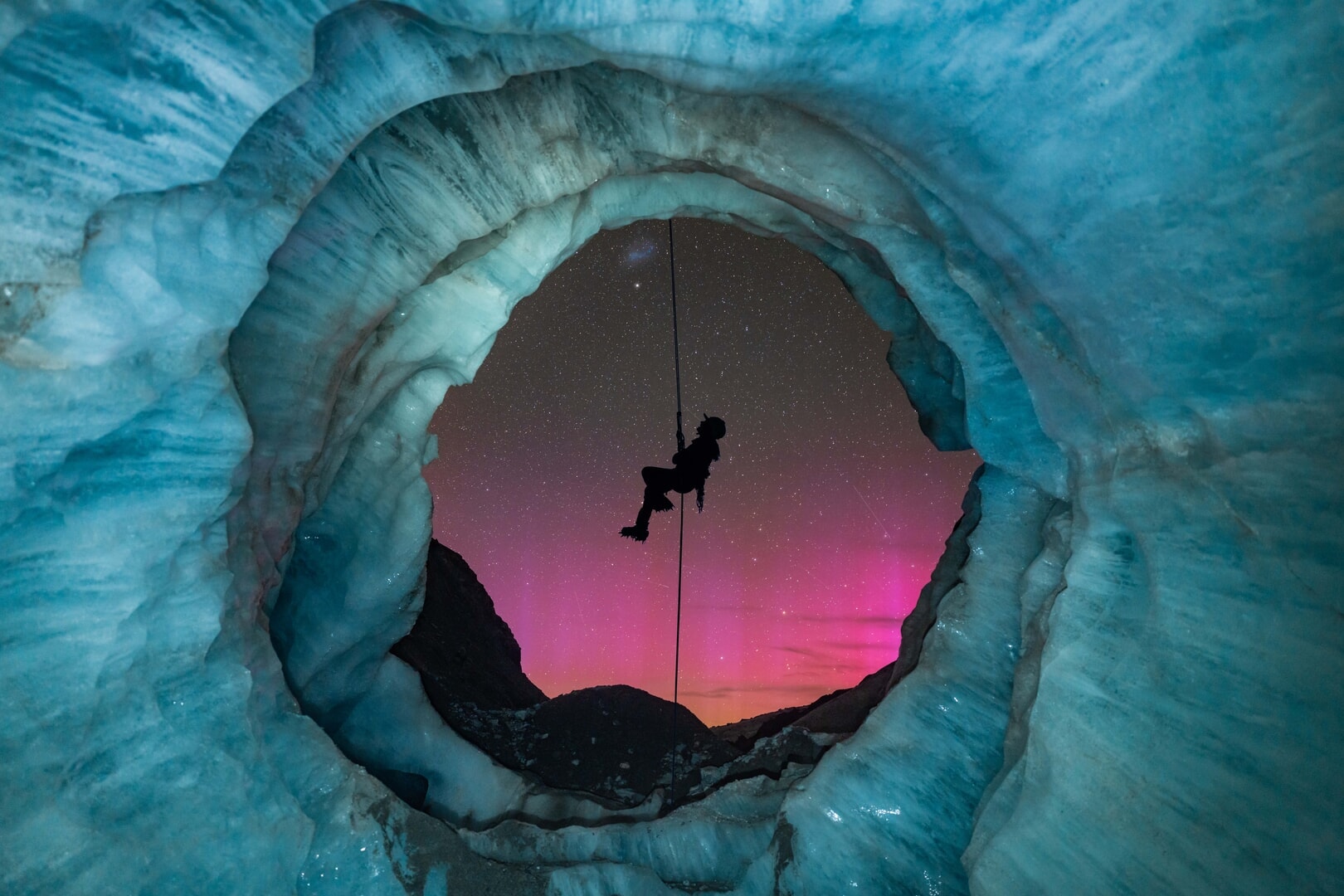
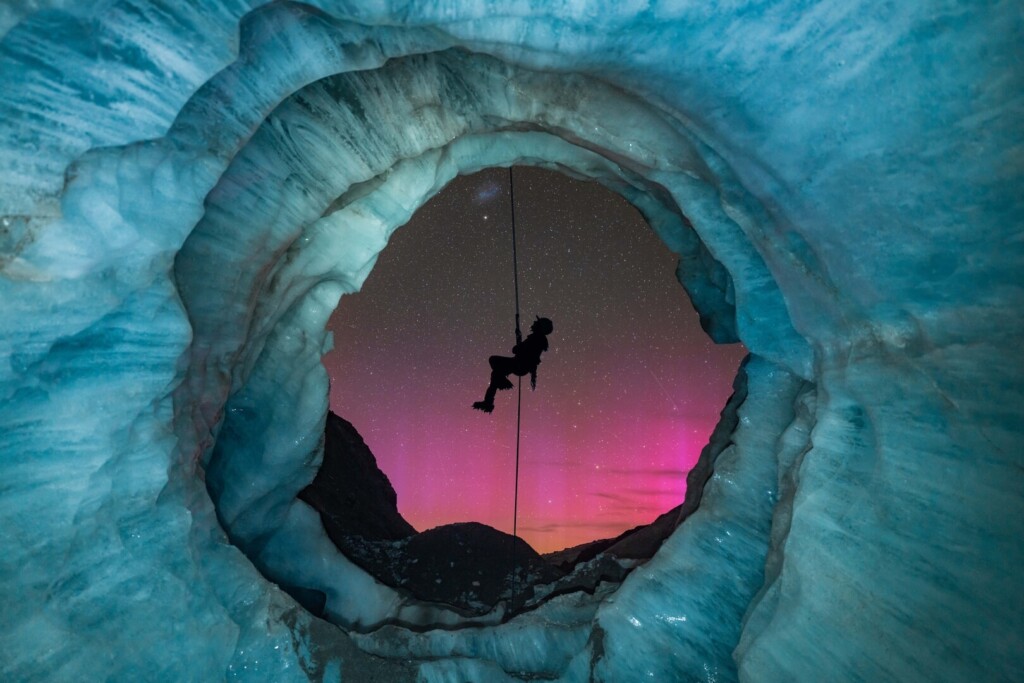
“Lights & Ice” – Tori Harp
“Lights & Ice” – Tori Harp
- Aoraki/Mt Cook National Park, New Zealand
I originally found this ice cave, called a moulin, 8 months prior to setting up this shot in Aoraki/Mount Cook National Park. Glaciers are a very dynamic environment, so I kept going back to monitor the changes of this moulin over the 8-month period. As the opening of the cave formed, I envisioned setting up a night shot with my friend abseiling down the mouth of the cave with New Zealand’s amazing starry sky in the background.
One magical night, everything finally came together! To my surprise, the Aurora Australis also lit up the sky. I managed to capture my friend’s silhouette perfectly placed in the center of the cave’s opening, and I love how the pinky tones of the aurora contrast with the icy colors of the cave. This dream shot ended up coming out better than I had originally envisioned, and I had a great night with my friends exploring the glacier!
- Sky and ice cave: f/1.8, ISO 2000, 20s
- Abseiler shot: f/2.8, ISO 1250, 1/50s
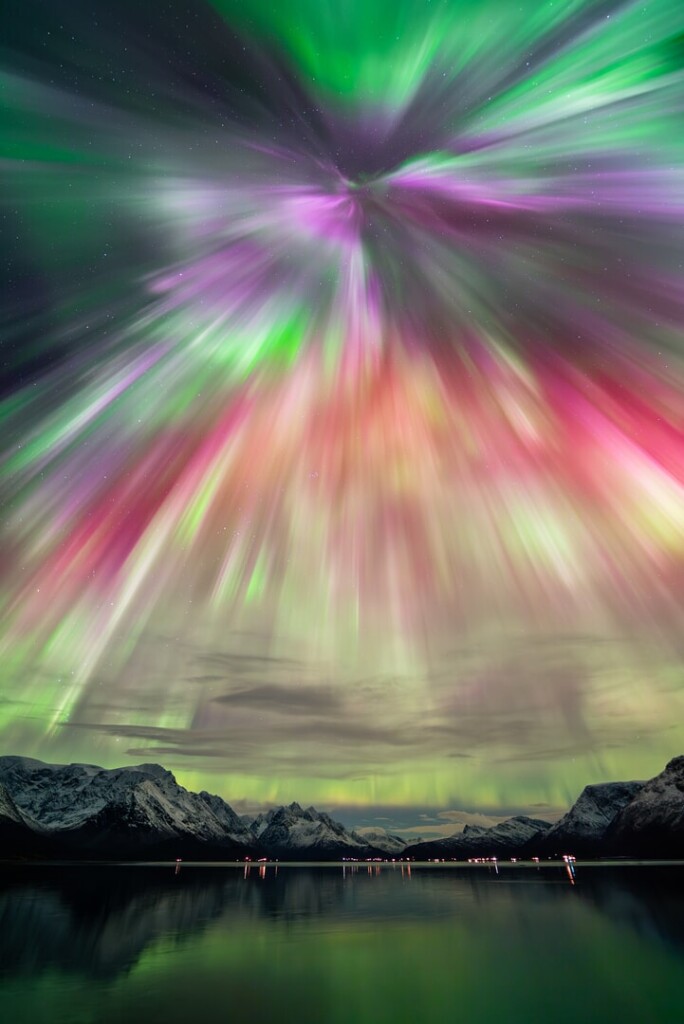
“Arctic Rain” – Vincent Beudez

“Arctic Rain” – Vincent Beudez
- Tromso, Norway
For me, Northern Lights photography is always about capturing unique moments; snapshots of this rare natural phenomenon. This is why I never use very long exposures.
I took this photograph on October 29th, 2025, near Tromso, Norway. A few seconds before capturing this scene, there was a “wall” containing colored layers – green and red – not uncommon during a substorm. But it suddenly became unstructured when a dancing corona appeared above it. I’ve seen plenty of aurora shows in my life, but nothing like this. And it happened in a location I’ve always wanted to photograph. It’s all about perseverance!
Standing beneath this auroral corona, I felt like I was standing in a natural cathedral with vibrant layers of color and light radiating toward me. I was super lucky to capture this shot, and my best advice is to be patient and do your research…the hard work pays off!
One single shot, 14mm, f/1.8, ISO 4000, 1s
- Sony A7SIII, astro-modified
- Sony 14mm f/1.8
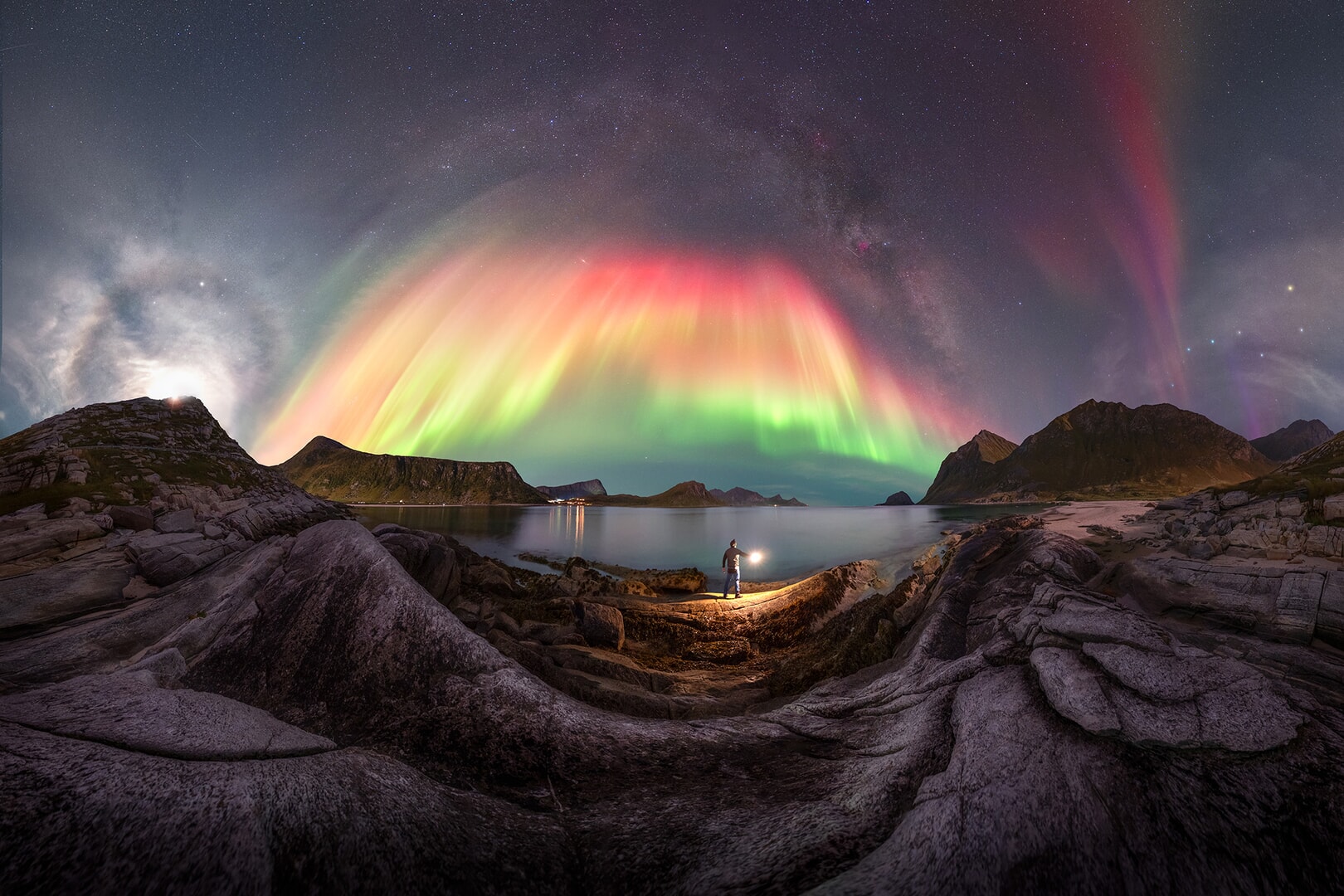
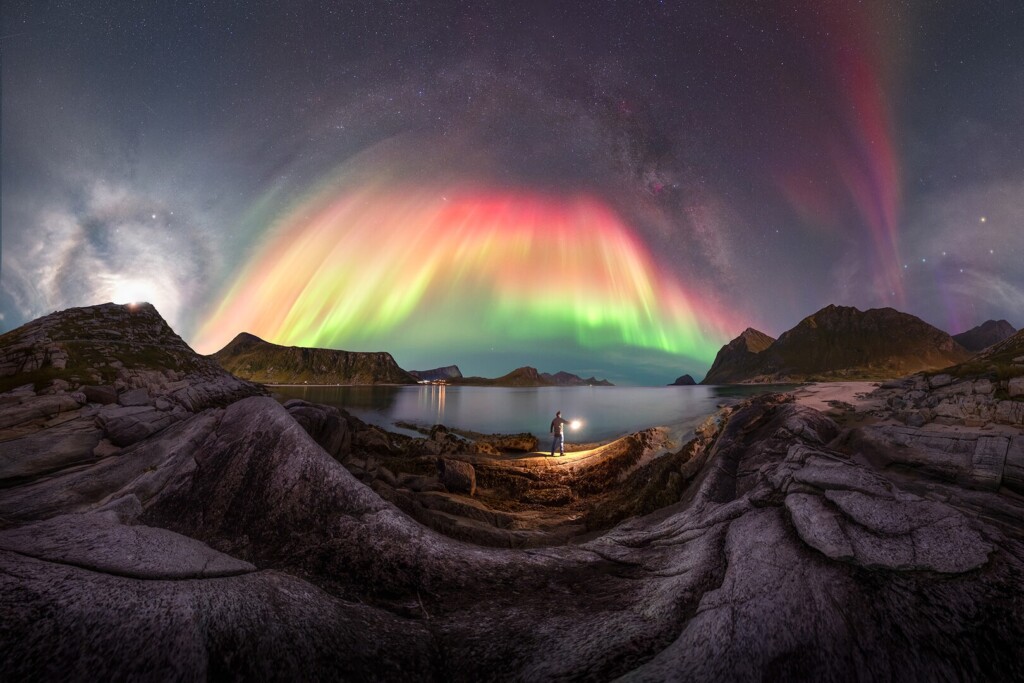
“Essence of the Arctic Night” – Giulio Cobianchi
“Essence of the Arctic Night” – Giulio Cobianchi
- Haukland Beach, Lofoten islands
Autumn in the Arctic is the best time to capture the “double arc” of the Milky Way and the Aurora Borealis. The nights have finally turned dark again after the endless summer days when the sun never sets. The summer Milky Way is already high in the sky shortly after sunset, and the Northern Lights return to dance across the sky in bands of pink, red, violet, and green.
During my last tour in September, I captured this 360° panoramic image at the border between Haukland and Vik Beach, where rugged mountains meet the wild Norwegian Sea. The intense Northern Lights and the bright moonlight softened the Milky Way, but the combination of all these elements in the Arctic sky felt absolutely magical — just as the Lofoten Islands always do.
Panoramic of 21 shots in 2 rows:
- Sky: 10 shots, 14mm, f/2.8, ISO 5000, 10 s
- Landscape: 10 shots, 14mm, f/3.5, ISO 5000, f3.5, 13 s
- Myself: 1 shot, 14mm, f/3,2, ISO 6400, 8 s
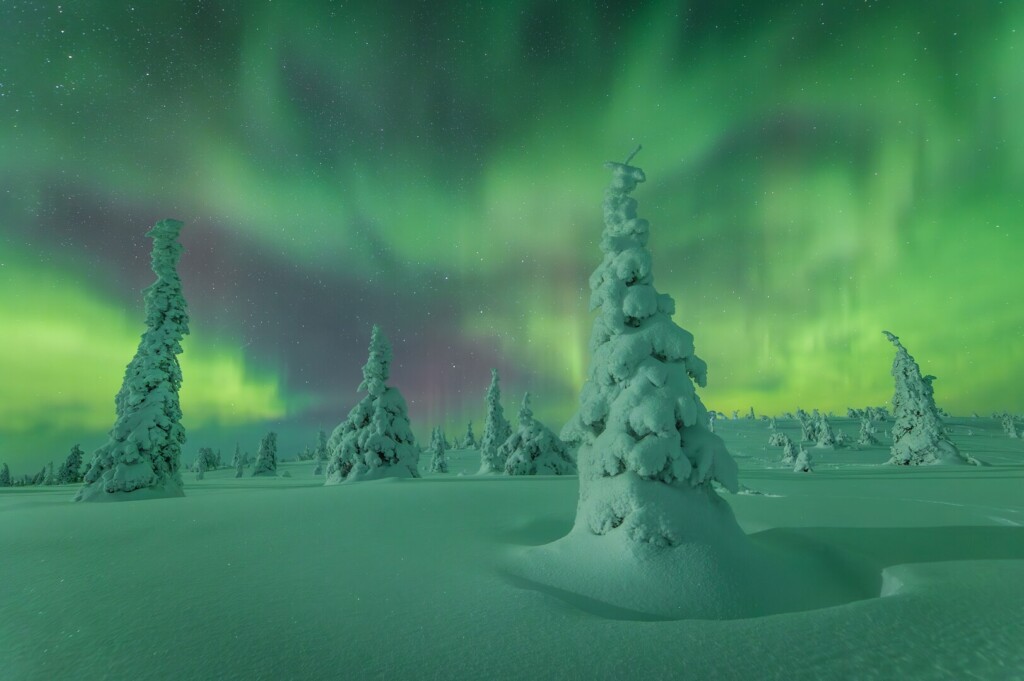
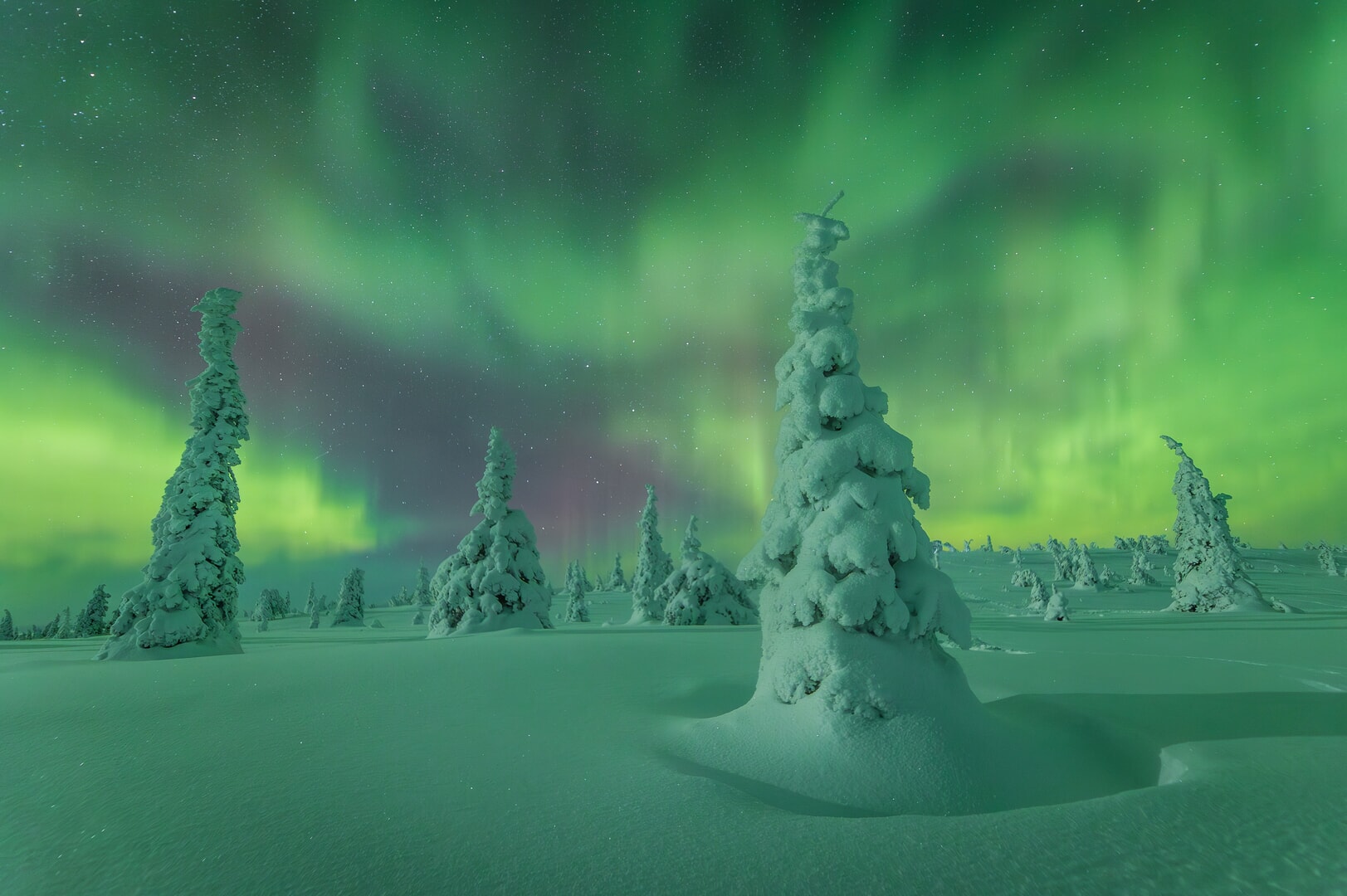
“Frozen Silence Beneath the Lights” – Nikki Born
“Frozen Silence Beneath the Lights” – Nikki Born
- Riisitunturi National Park, Finland
This night was truly unforgettable. Capturing the famous frozen trees of Riisitunturi beneath the Northern Lights had been a dream for years.
In March 2025, we set out to make it happen, but the weather challenged us with thick clouds all week. On our final night, we hiked into the park, hoping for a glimpse of the sky. The wind was biting, and we took shelter among the frozen trees, waiting in silence. After hours of nothing, we finally gave up and began the hike back to our cabin.
Then, just as we were about to call it a night, a break appeared in the clouds. We grabbed our gear and hurried back up the Riisitunturi Hill. The moment we reached the top, the sky burst into vivid shades of green. It was an explosion of light and wonder.
This night was the experience of a lifetime: the dream shot I had longed for and a moment that words can hardly describe. Photographing the Northern Lights demands patience and persistence, but when they finally appear, time stands still, and nature reminds you just how amazing our world can be.
14mm, f/2.8, 10s
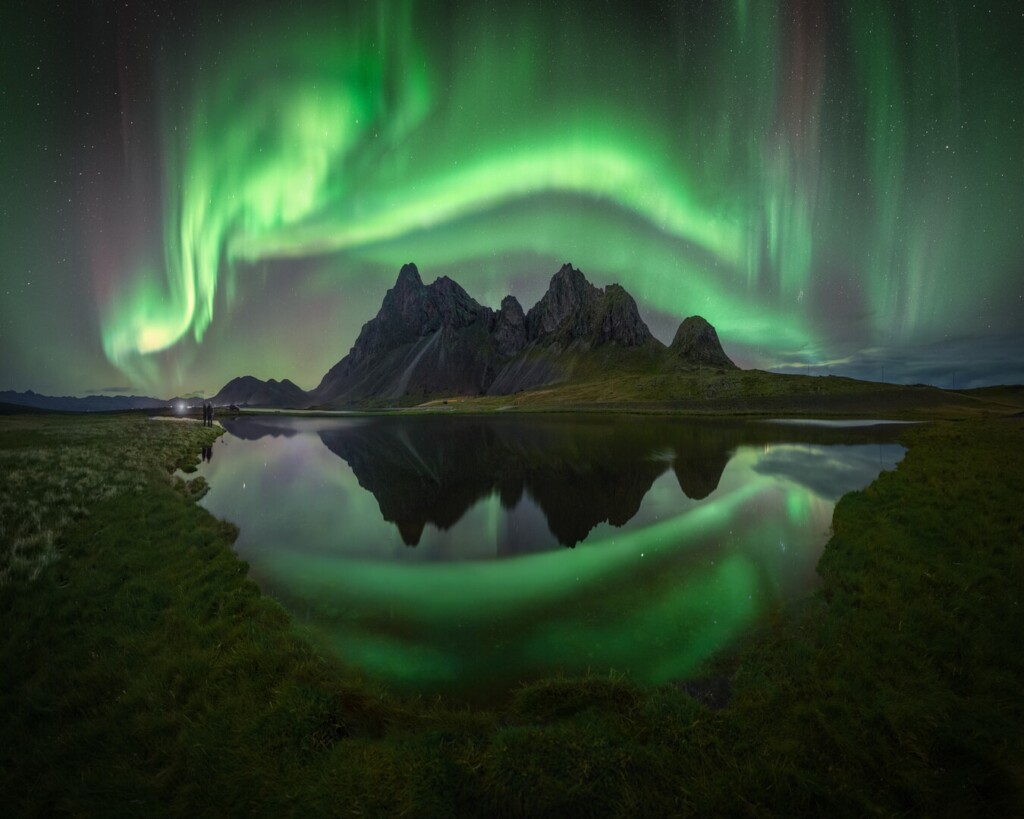
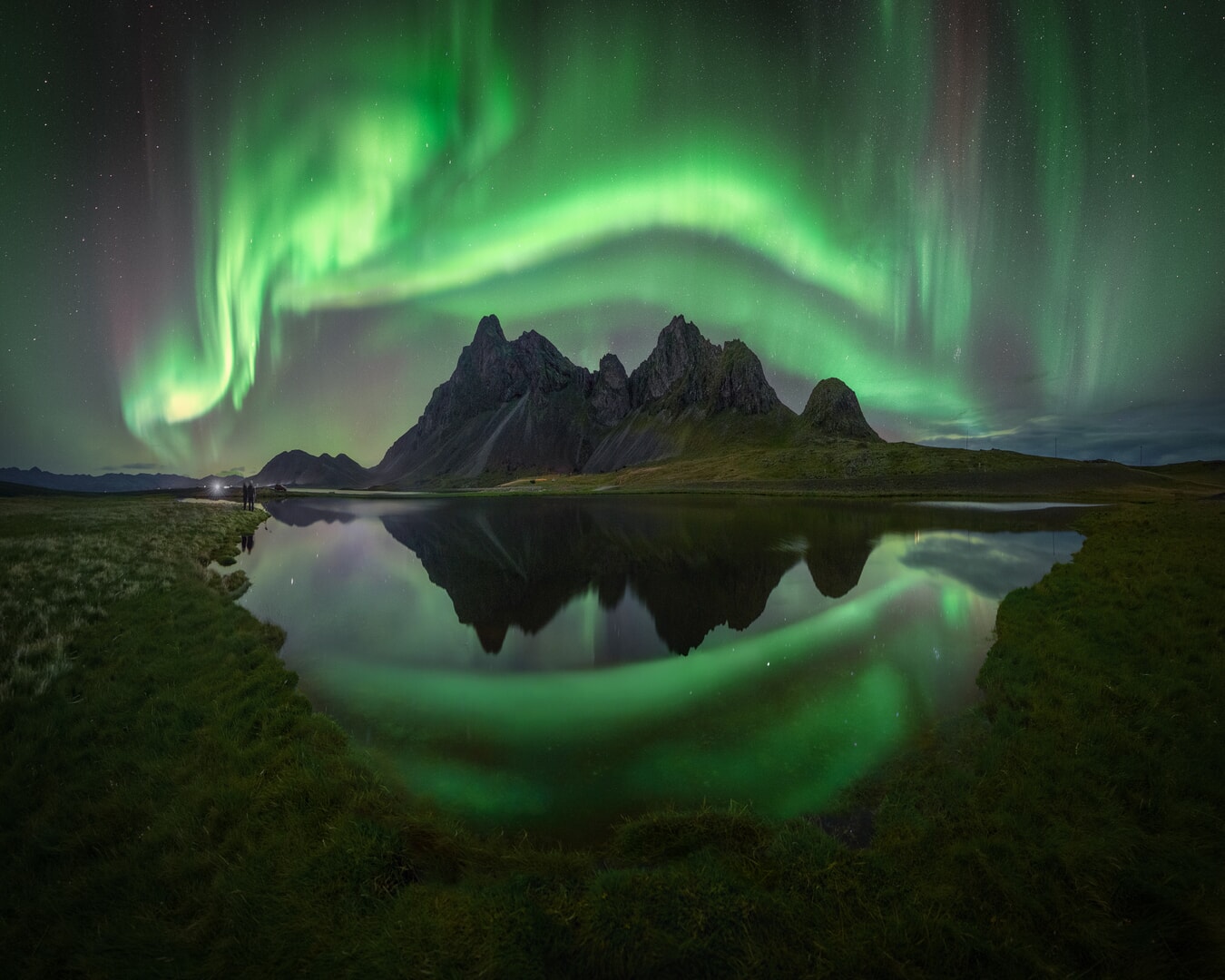
“Sueños en Eystrahorn” – Pablo Ruiz

“Sueños en Eystrahorn” – Pablo Ruiz
- Eystrahorn, Iceland
Without a doubt, one of the most challenging aurora panoramas I’ve ever taken was this one at one of Iceland’s most spectacular locations.
Capturing a panorama with reflections and auroras that move so quickly is quite difficult. It was the photograph of my dreams, so I arrived in the afternoon to prepare the angles and options for the night. Clear skies and very little wind looked perfect for capturing reflections in the different pools.
Auroras were already visible in the sky during the blue hour, so I quickly headed to the spot where I had planned the composition. The wind shifted, making it difficult to capture the reflections, but the moment the sky exploded, the wind stopped, and for a few brief moments, I achieved my dream photograph. It was a great joy to witness and capture such a moment.
Panorama 2 rows of 8 photos:
- Sky: f/2.8, ISO 6400, 6s
- Ground: f/2.8, ISO 6400, 15s
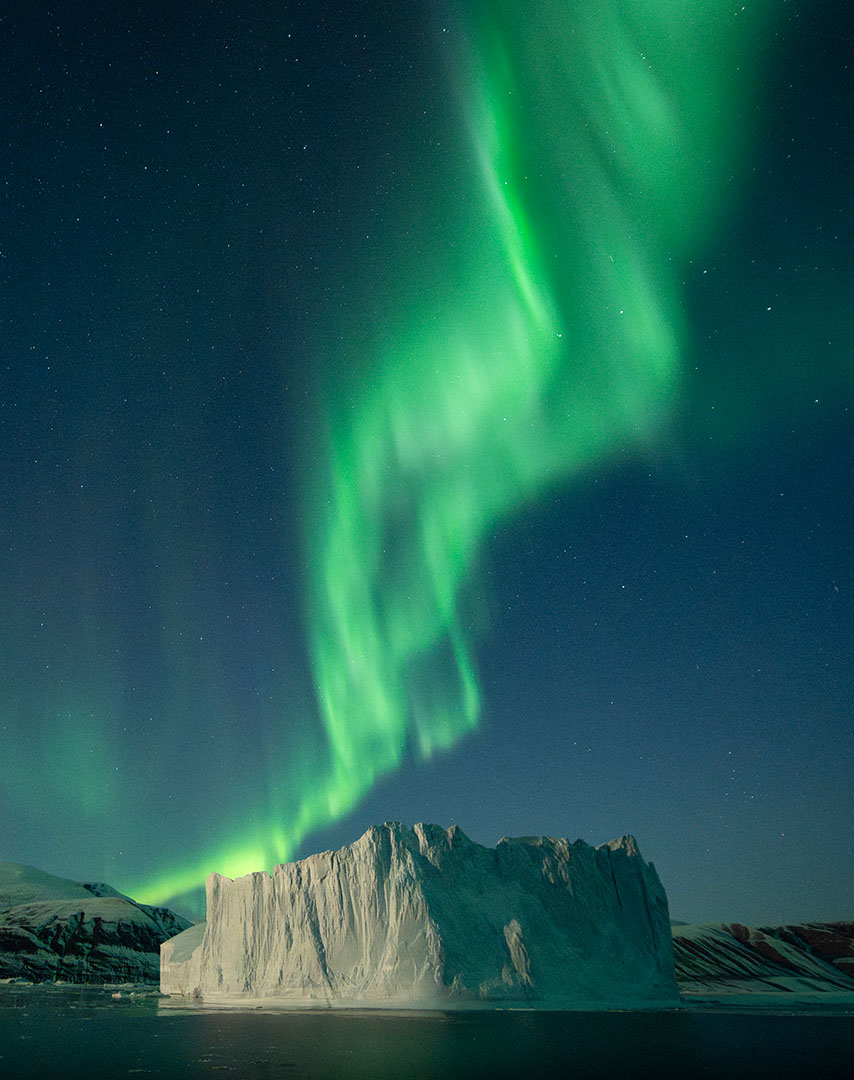
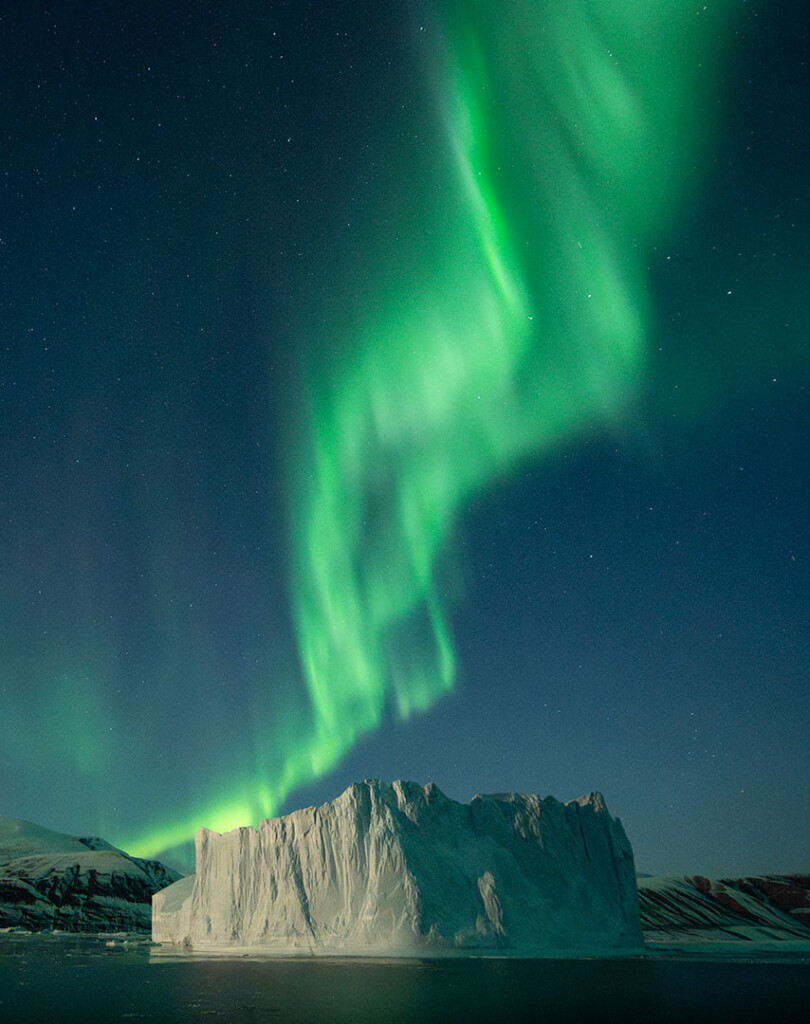
“Twisting Turn” – Virgil Reglioni

“Twisting Turn” – Virgil Reglioni
- Scoresbysund, Greenland
Behind every image lies a deliberate process — a fusion of coordination, timing, and technical precision carried out from a ship navigating some of the harshest conditions on Earth. Photographing the aurora over the ice is never about luck; it’s the result of preparation, teamwork, and experience. From the ship’s bridge to the camera deck, every movement is carefully planned to give the lights their best possible stage.
During the day, we navigated through fields of icebergs, scouting for the perfect one — a curve, a ridge, or a translucent arch to anchor the composition. Guided by how the aurora moves across the Greenlandic sky, we aligned our chosen iceberg and ship precisely, uniting earth, ice, and sky in one luminous image.
Working closely with the bridge crew, we searched for newly formed ice strong enough to hold the vessel steady. A stable platform was vital — it allowed us to capture long exposures between half a second and two seconds, every moment of stillness essential as the aurora began to dance above.
When the Northern Lights intensified, our focus shifted. We exposed for the highlights, preserving the delicate shapes of light without losing their definition. Each frame became a balance between nature’s raw power and the patience of observation.
15mm, f/2.0, ISO 2500, 1.3s
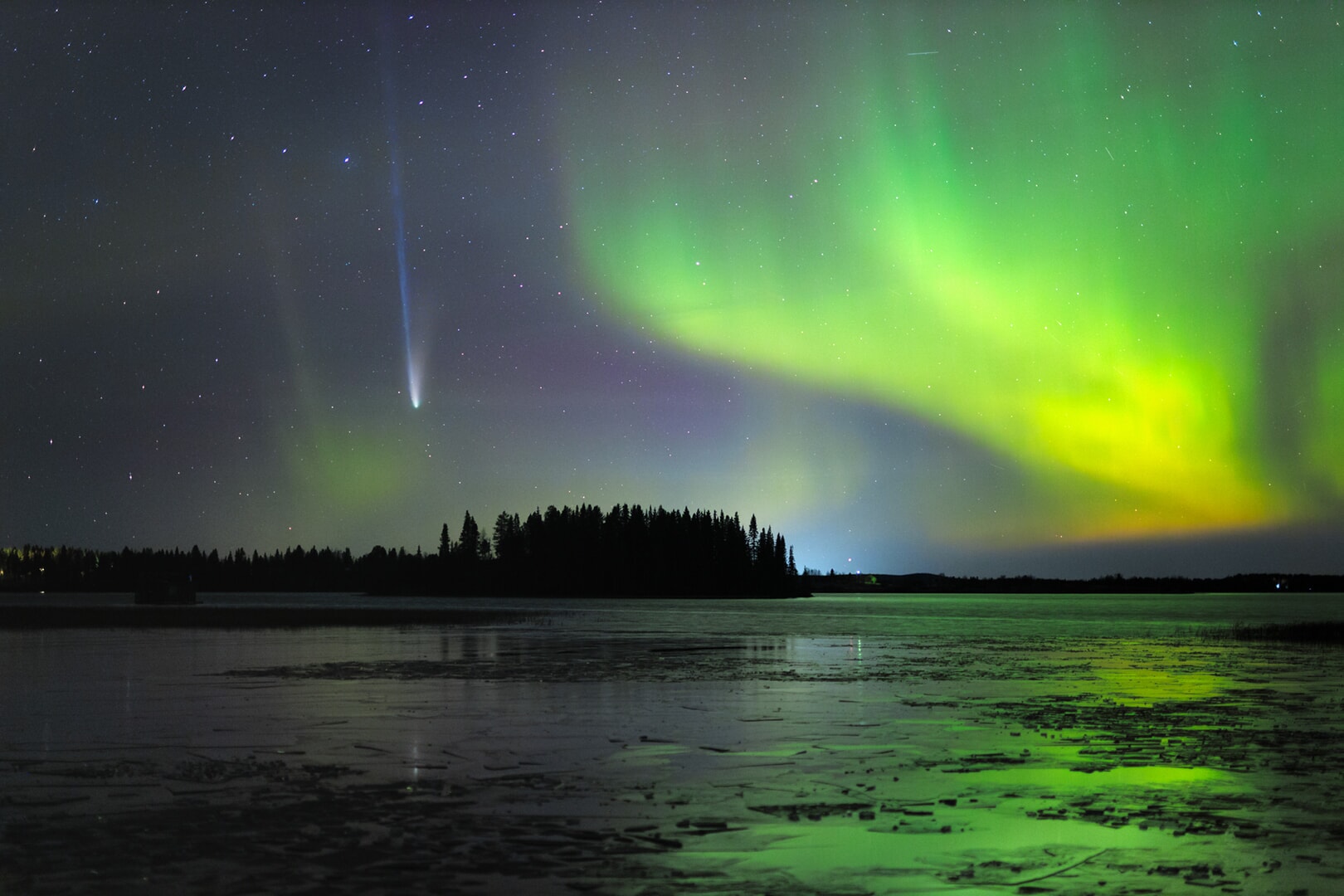
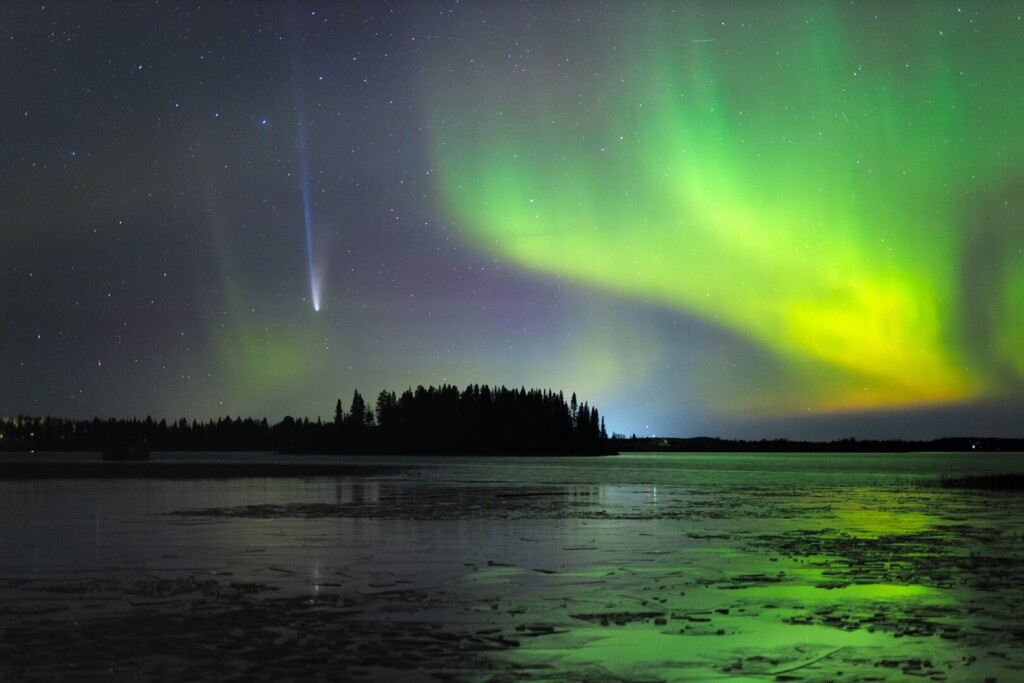
“Aurora Comet Lemmon” – Petr Horálek

“Aurora Comet Lemmon” – Petr Horálek
- Skaulo, Sweden
The night of 24 October, 2025, was incredible. I had just moved to Sweden, where I organized an astrophotography workshop. We headed to Skaulo, where we found an incredible viewpoint over Suotojärvi Lake.
This night coincided with the C/2025 A6 (Lemmon) Comet, which was only discovered back in January 2025. The comet was so bright that we could see it with our naked eyes, even when it was very low on the horizon.
Fortunately, I had my camera with me! I photographed the comet darting through the sky beside the bright Aurora Borealis. Capturing two stunning natural phenomena in one shot was an exhilarating experience. The comet and the aurora appeared to be in a sort of dance, giving us an amazing show that I’ll remember forever.
f/1.4, ISO 2500, 3.2s exposure from tripod
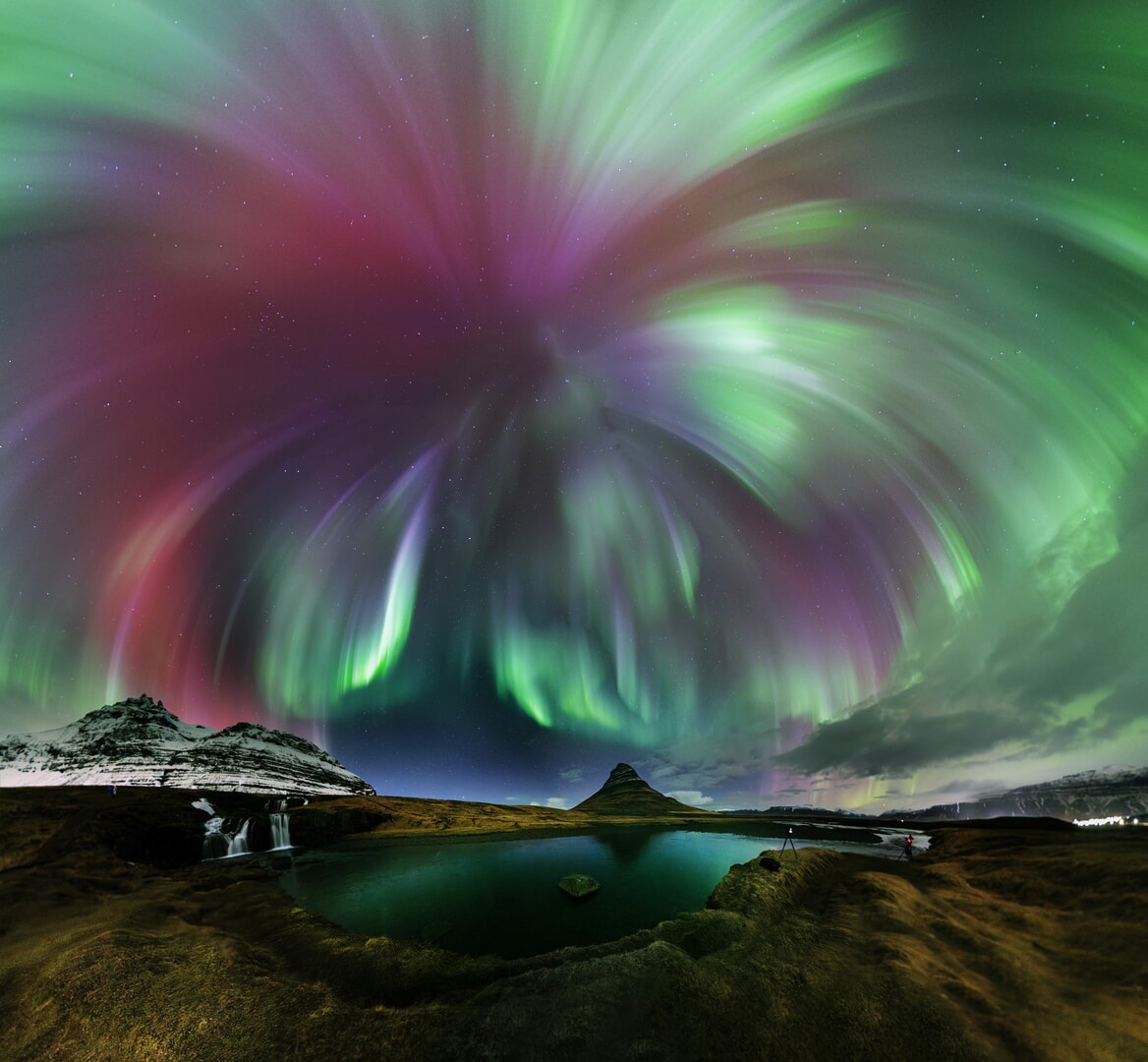
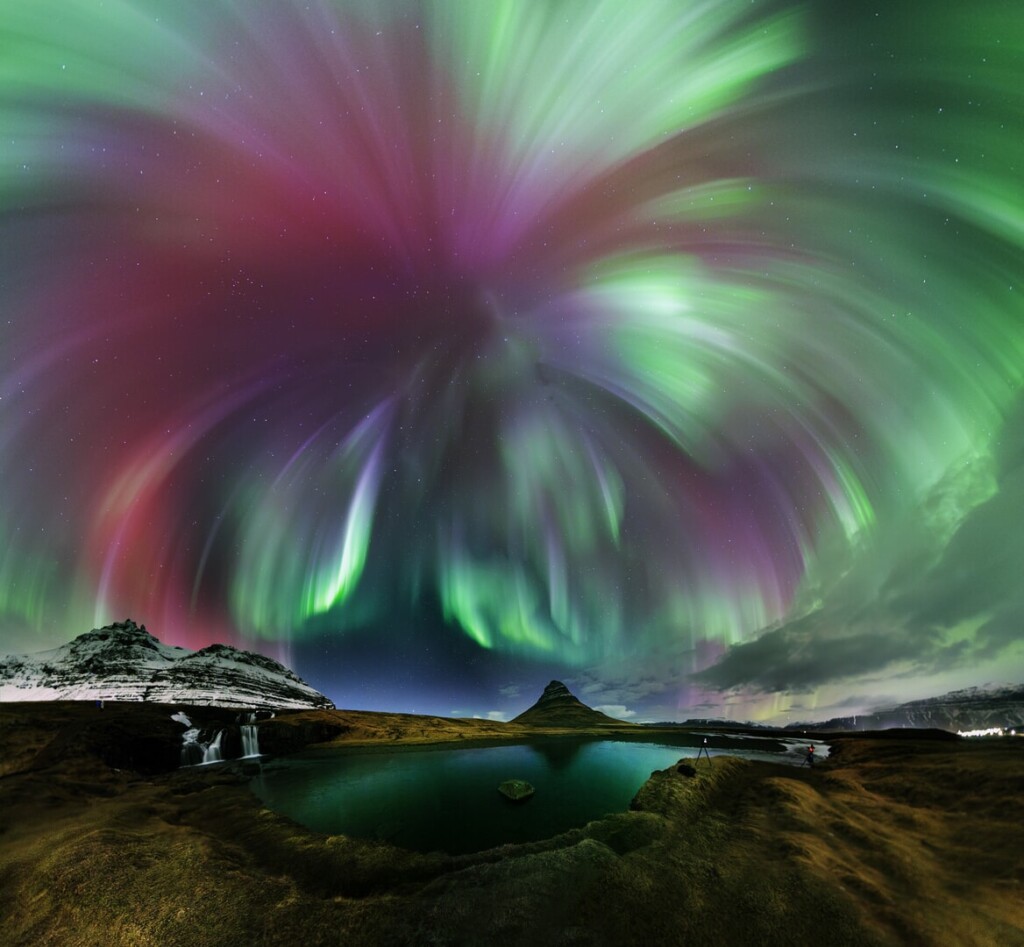
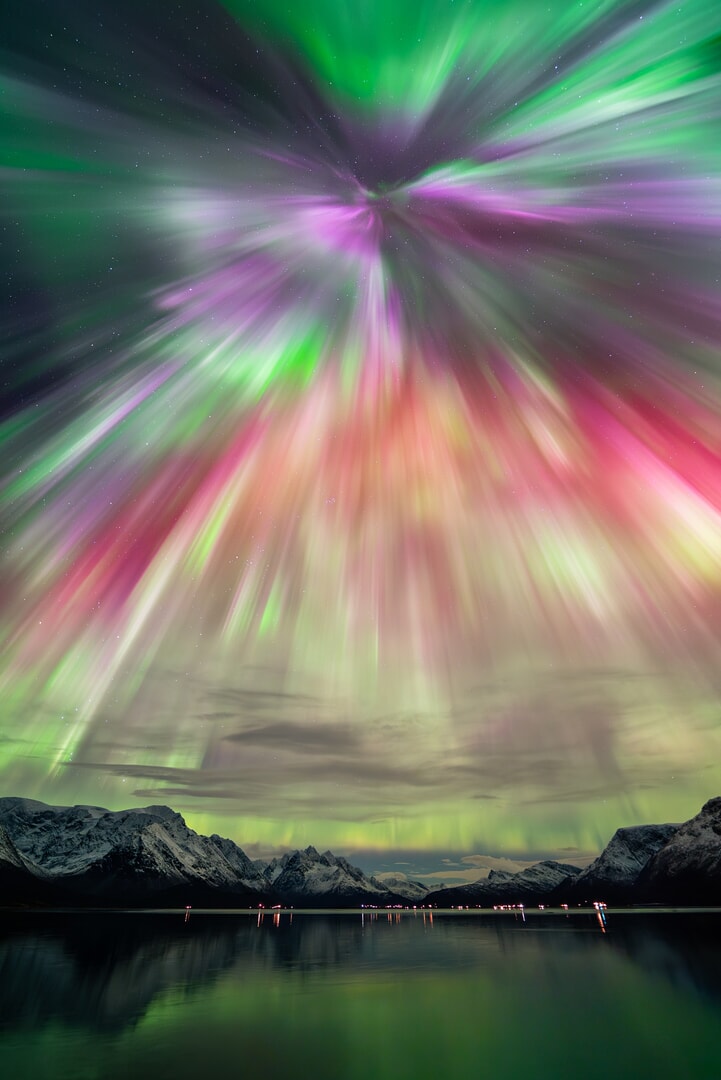
“Corona Blast Aurora Geomagnetic Storm” – Roi Levi
“Corona Blast Aurora Geomagnetic Storm” – Roi Levi
- Kirkjufell, Iceland
This image was captured during the March Equinox, as a geomagnetic storm structure brought a mesmerizing light show. A full-zenith Auroral Corona erupted overhead – powerful, bright pillars of light radiated across the sky, creating a stunning crown-light blast shape.
This rare phenomenon occurred on March 21, 2025, when a CME struck Earth, triggering a G2 geomagnetic storm. The shot is a 360° panoramic stitch of 21 frames, capturing the entire Aurora shape and a complete sky view. I used a Sigma Art fast f/1.4 lens to get a fast exposure and capture the pillar structure.
Kirkjufell is one of Iceland’s most iconic mountains, and witnessing the aurora here was a one-of-a-kind experience. With the Kirkjufellsfoss waterfalls in the foreground, this image is a dynamic representation of the sweeping auroral corona.
21 Frames, f/1.4, ISO 3200, 1/2s
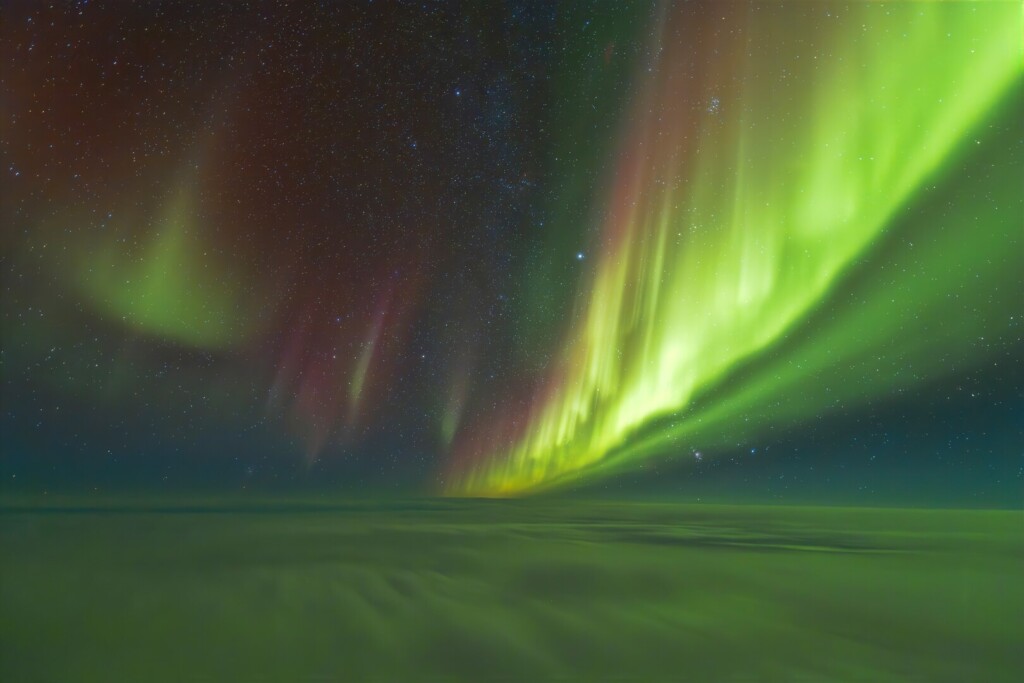
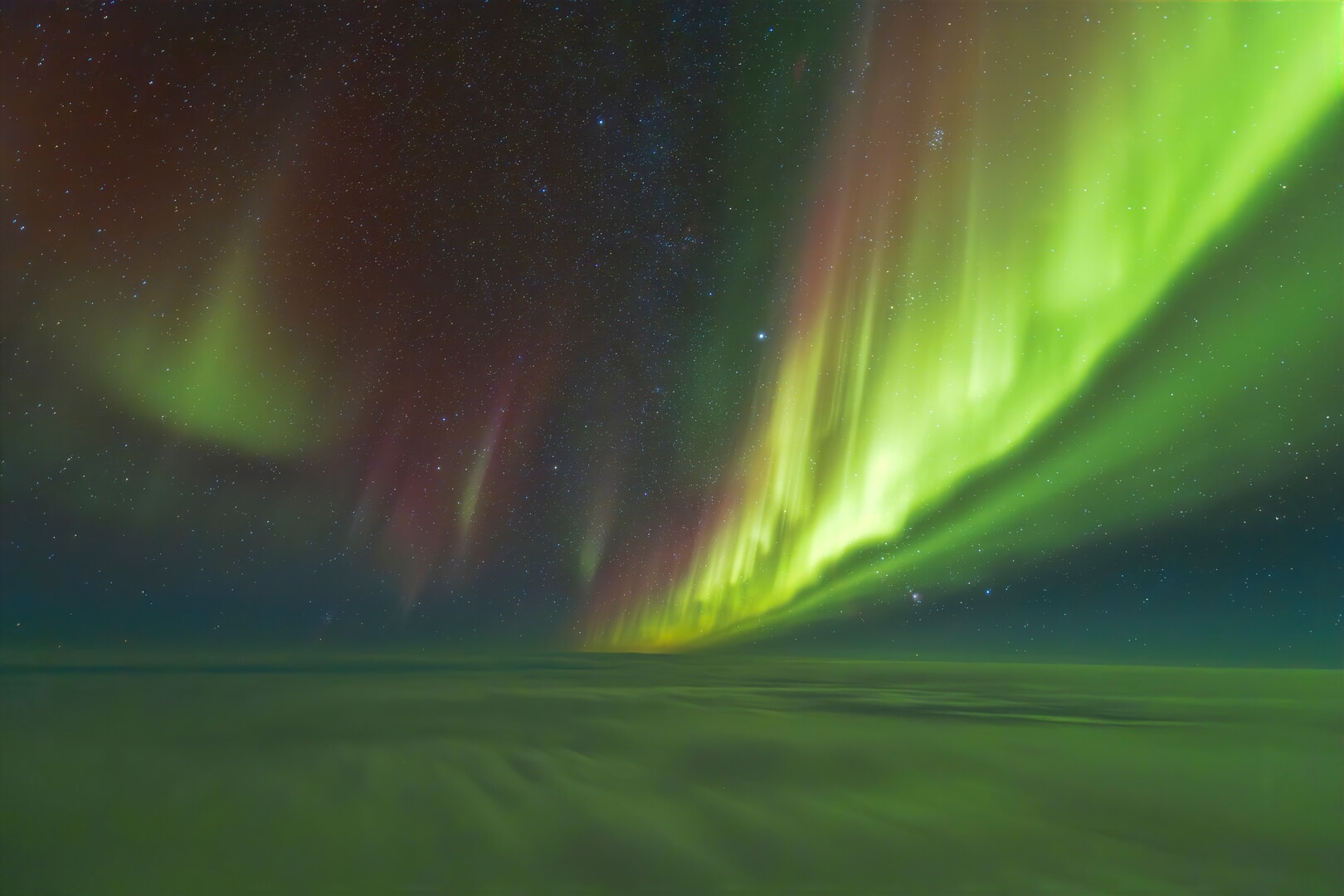
“Speechless” – Ralf Rohner

“Speechless” – Ralf Rohner
- Hudson Bay, Canada
I was flying at 35,000 feet over Hudson Bay, Canada. As a commercial pilot, night flights often test one’s patience and endurance. Confined to a narrow seat, surrounded by seemingly never-changing instruments, the pilot stares into a boundless darkness and wonders what drives him to endure such long, lonely hours. The monotony can seem endless – until suddenly, everything changes. There are rare nights when the sky rewards you for all that fatigue and isolation.
Above a silent sea of clouds, cocooned within a fragile shell of metal, the pilot witnesses something extraordinary. Curtains of light dance across the heavens, painting the darkness with vivid greens and purples. In that breathtaking moment, every struggle feels justified, and words simply fail. What I couldn’t express with words, I captured in this photograph.
f/2, ISO 6400, 5s
- Canon EOS-R, astro-modified
- Sigma 28mm f/1.4 ART
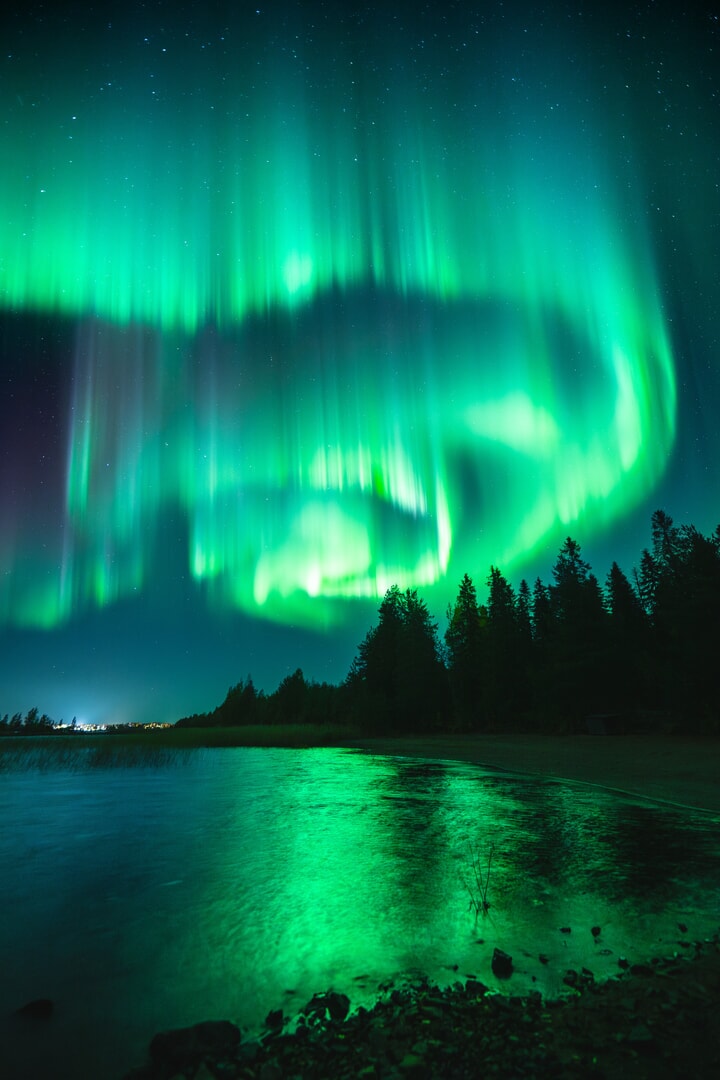
“The Northern Crown” – Mari Jääskeläinen

“The Northern Crown” – Mari Jääskeläinen
- Pyhäjärvi, Finland
I step outside and take a look at the sky above my house. It’s time. I feel the adrenaline rush in as I gather my gear and put on more warm clothes.
Just a quick drive to the lake nearby and I’m all set up for the night! During active nights, I always follow the real-time solar wind data to predict what’s yet to come. On this night, there were no significant CMEs as far as I remember. And I was perfectly fine with that, as this could be the night when I finally get the shot I’ve dreamed about for a long time.
In my mind, I imagine the Northern Lights creating a clear, bright green spiral to the northern sky, just above the trees, so the foreground would fit perfectly into the frame. I couldn’t believe my eyes when the auroral arc started taking the exact shape I had only dreamed about for so long! Perfect reminder of how beautiful these subtle auroras can be!
GET YOUR FREE EBOOK!
– PHOTOGRAPHING THE NORTHERN LIGHTS –
BEST SETTINGS, GEAR, PLANNING, TIPS, AND MORE!
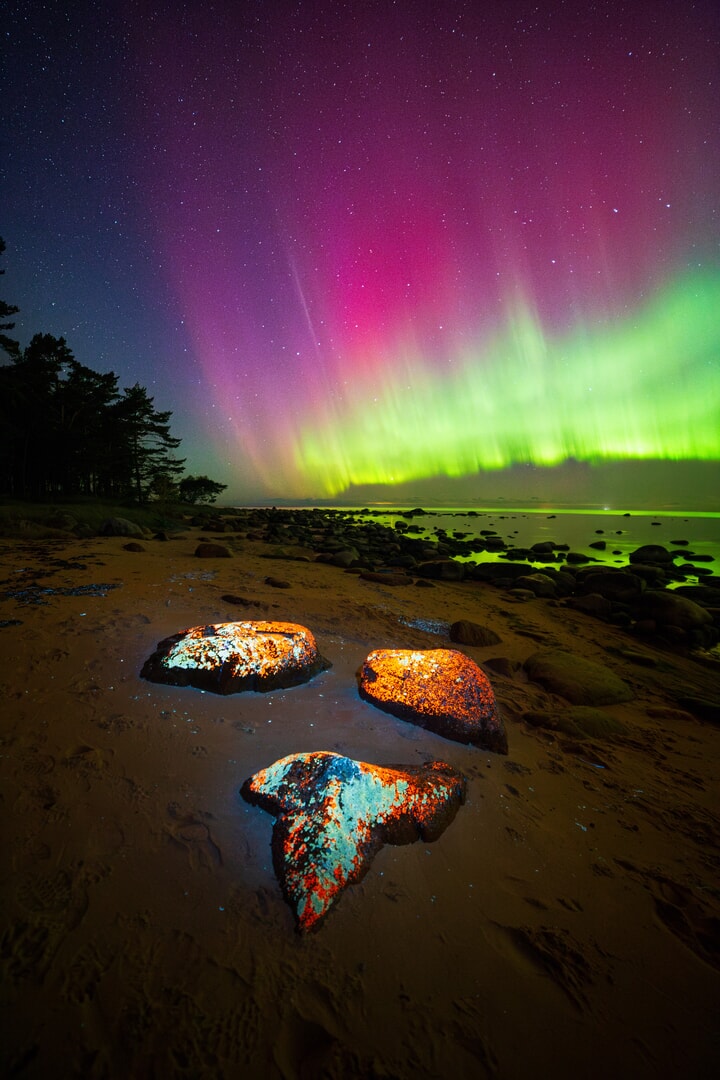
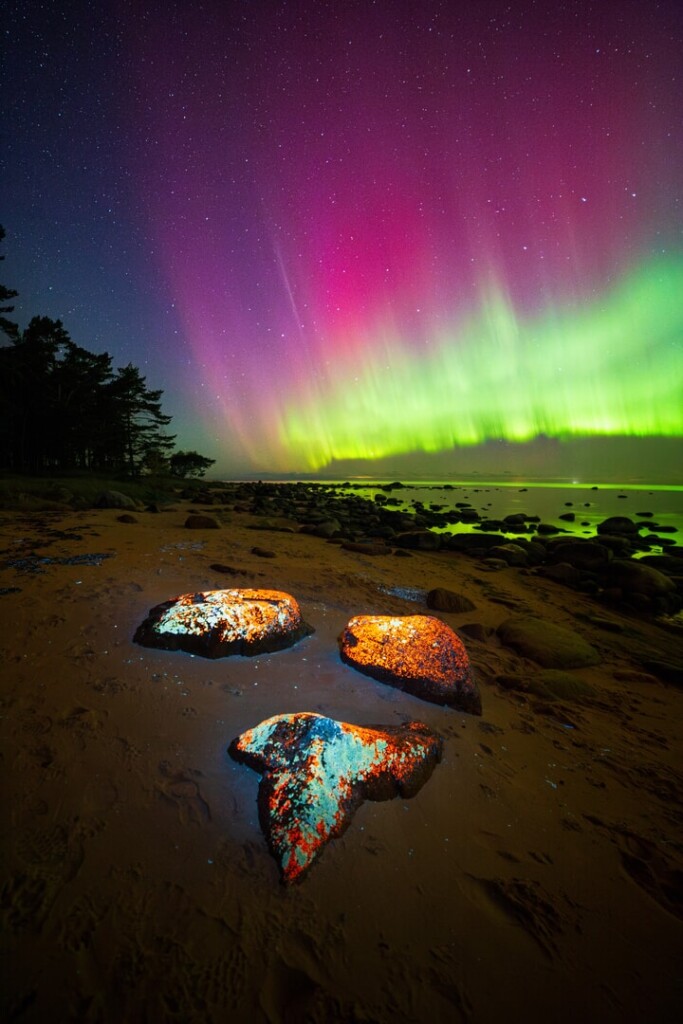
“Neon Nightfall” – Andres Papp
“Neon Nightfall” – Andres Papp
- Türisalu, Estonia
I shot this image on a quiet, rocky beach as a strong aurora storm rolled in from the north. At first, it was just a low green arc, but it quickly erupted into vertical curtains of lime and rare magenta. To connect the sky with the foreground, I illuminated the shoreline rocks with a strong 365 nm UV light torch, which made the minerals pop and added the surreal glow you see in the image.
The challenge was balancing everything—an exposure of about 5 seconds to keep the aurora structure sharp and managing the UV spill so it didn’t look artificial. What keeps me coming back to Northern Lights photography is this mix of science and magic: you study forecasts and KP indices, but the real reward is when the sky does something unexpected, and you’re prepared to capture it in a single, colorful frame.
Single exposure, 14mm, f/2.8, ISO 6400, 5s
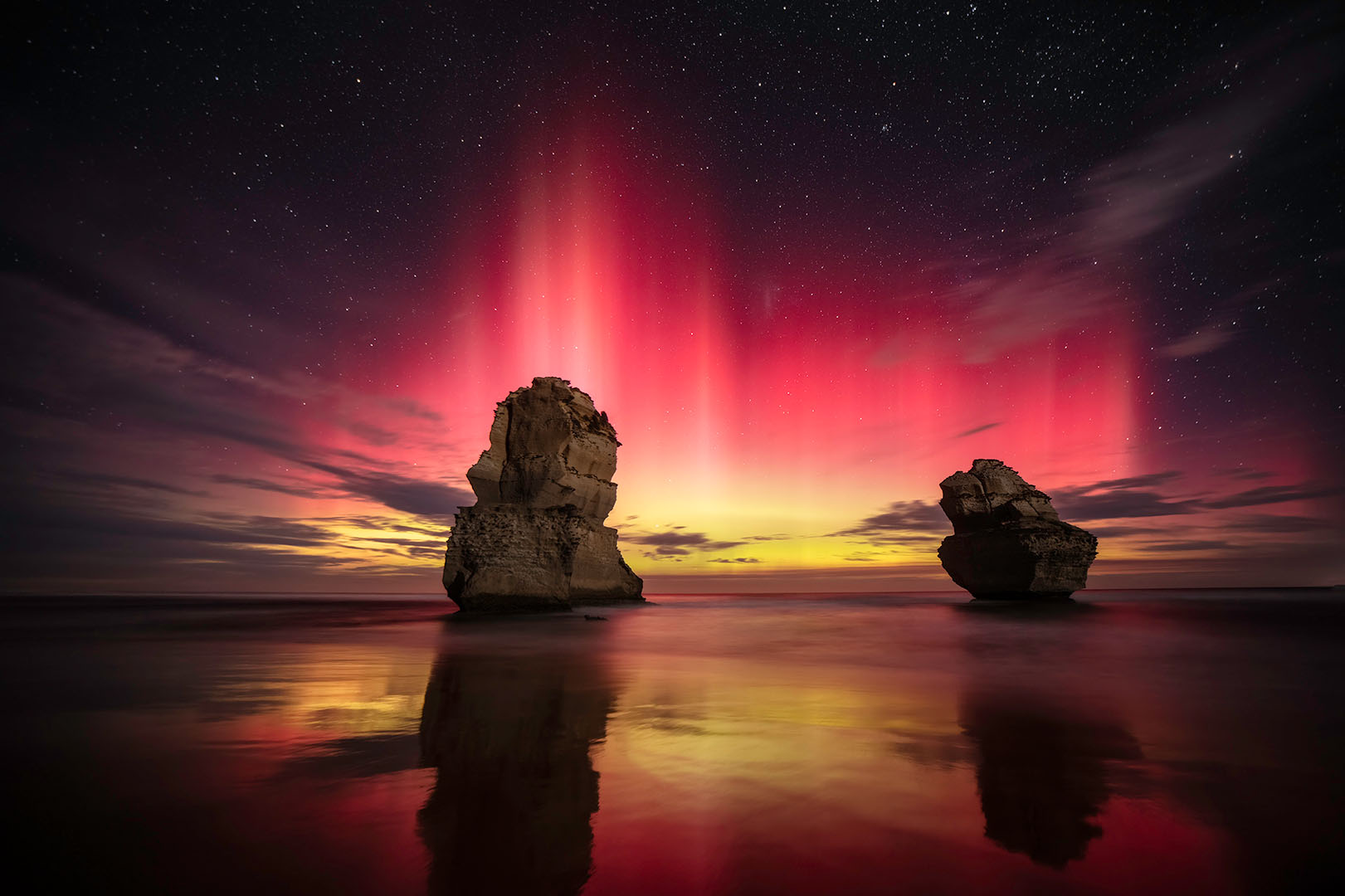
“Gibson Steps Aurora” – Jeff Cullen

“Gibson Steps Aurora” – Jeff Cullen
- Great Ocean Rd, Victoria, Australia
I had been struggling to find the motivation to get out and shoot. The aurora was predicted, as were the clouds, but I decided to take the chance and drive the hour to this iconic destination. The cloud prediction was correct, but I still went down the 86 steps to the beach and crossed the sand to the Gog and Magog sea stacks. The clouds started to clear, and I was able to shoot some great images before the aurora died down. I packed up and had another nearby destination in mind.
Climbing back up the stairs, the beams were so big and bright in the corner of my eye! I ran back down to the beach and quickly set up my camera again. This image shows the magic that happened that night; I was absolutely amazed and astounded that such a weak aurora forecast brought me such a brilliant show.
Moral of the story: Go and shoot! There is nothing to lose, but the finest nature photos to gain.
f/2.8, ISO 1000, 30s
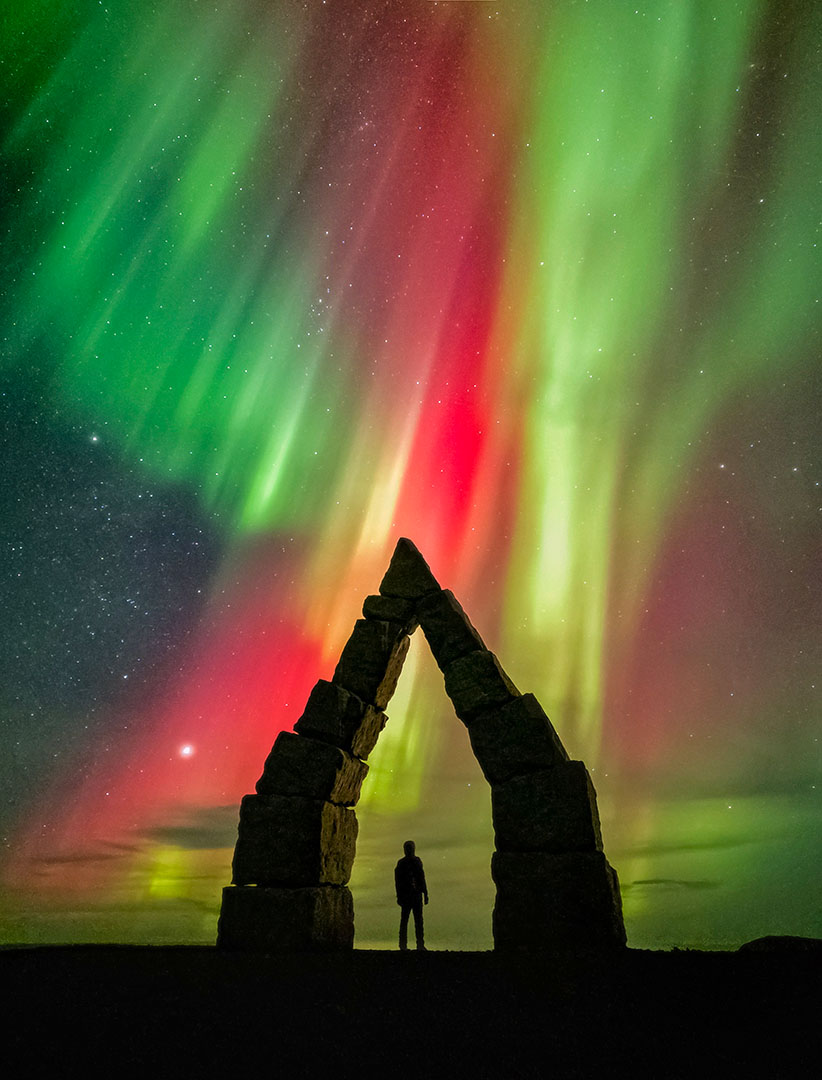
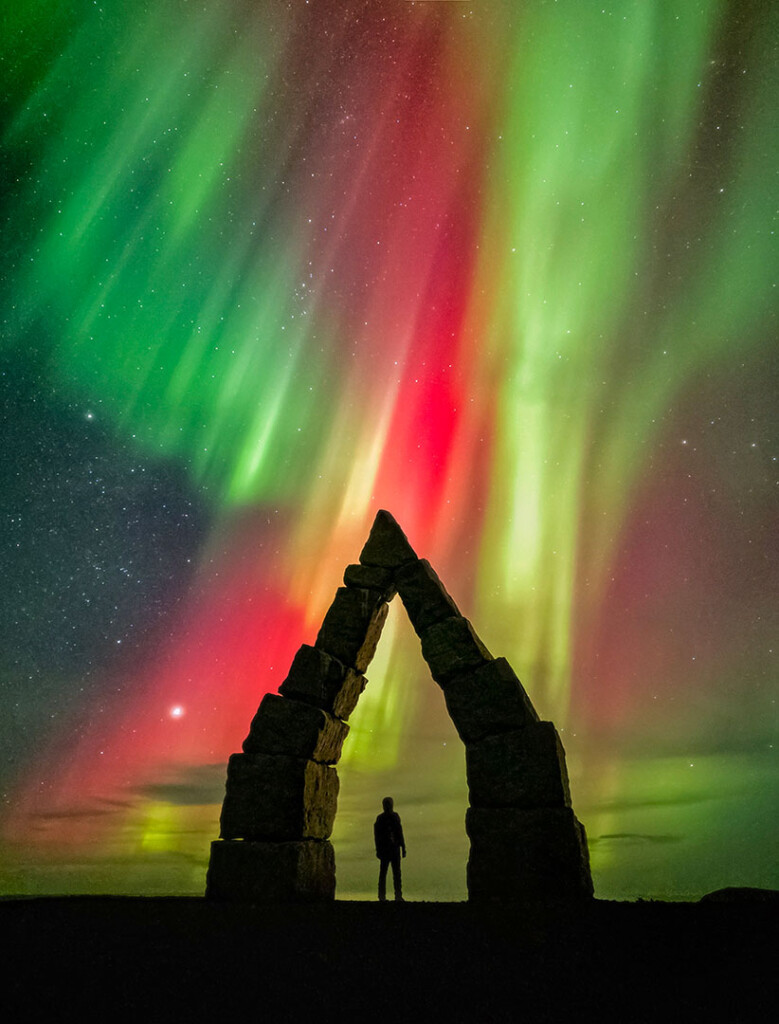
“Nightscape” – Sadeq Hayati

“Celestial Fireworks on New Years” – Sadeq Hayati
- Raufarhöfn, Iceland
These days, a mobile phone isn’t just a communication device – it’s a window to the universe! In addition to accessing the online encyclopedia of humanity, today, it can also introduce us to the world beyond our planet!
This photo is a single-shot capture from Iceland, taken with my Samsung mobile phone in Pro mode, with an 8-second long exposure. It shows the “Arctic Henge” (Heimskautsgerðið) in Raufarhöfn, Iceland.
The triangular stone gateway is a prime spot for viewing the aurora, and I photographed it just as a colorful display of red and green lit up the sky. I stood underneath the arch to provide a sense of just how small I felt in this moment…all this natural beauty unfurling before my eyes was an experience I’ll treasure forever.
Wide lens 1x 23mm , f/1.7, ISO 3200, 8s
- Samsung Galaxy S23 Ultra mobile camera
- Mobile tripod
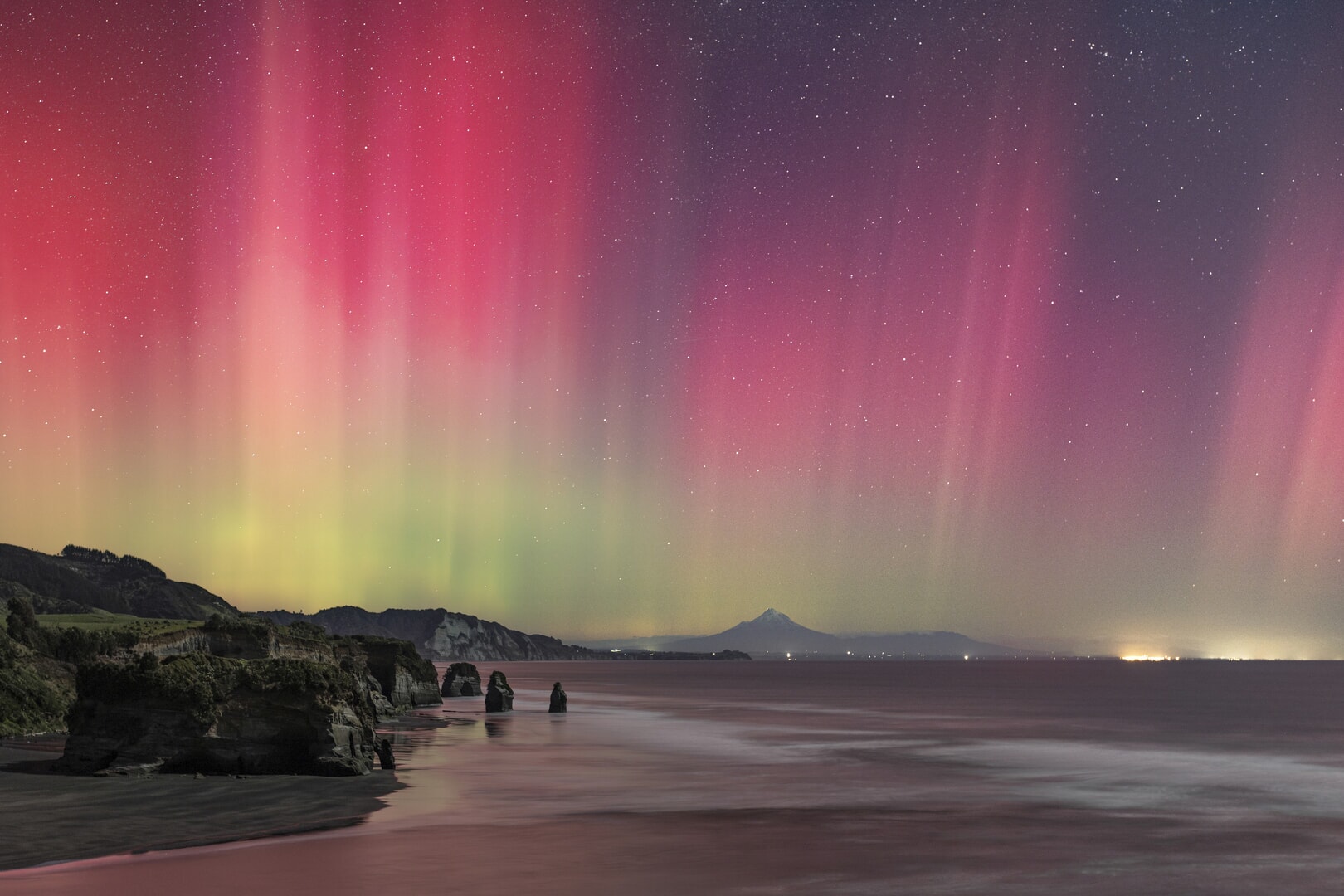
“Guardians of the Aurora” – Daniel Mickleson
“Guardians of the Aurora” – Daniel Mickleson
- Taranaki, New Zealand
A rare aurora event lit the west coast of New Zealand’s North Island in vivid curtains of pink and green. In the foreground, the rock formations known as the Three Sisters stand as guardians of the shoreline, while the sacred Taranaki Maunga rises in the distance. Within Te ao Māori (the Māori worldview), such natural features are not just landscapes but ancestral presences, carrying the role of guardianship. Beneath the aurora, earth, sky, and ancestry converge in a moment both fleeting and timeless.
After capturing my first aurora during the May 2024 storm, I was hooked. Travelling several hours from my home to this special location, I hoped the forecasts would be correct. Even with a near–full moon, the powerful display shone across the sky. I could see the beams dancing overhead — a truly spectacular sight.
f/2.8, ISO 1250, 13s
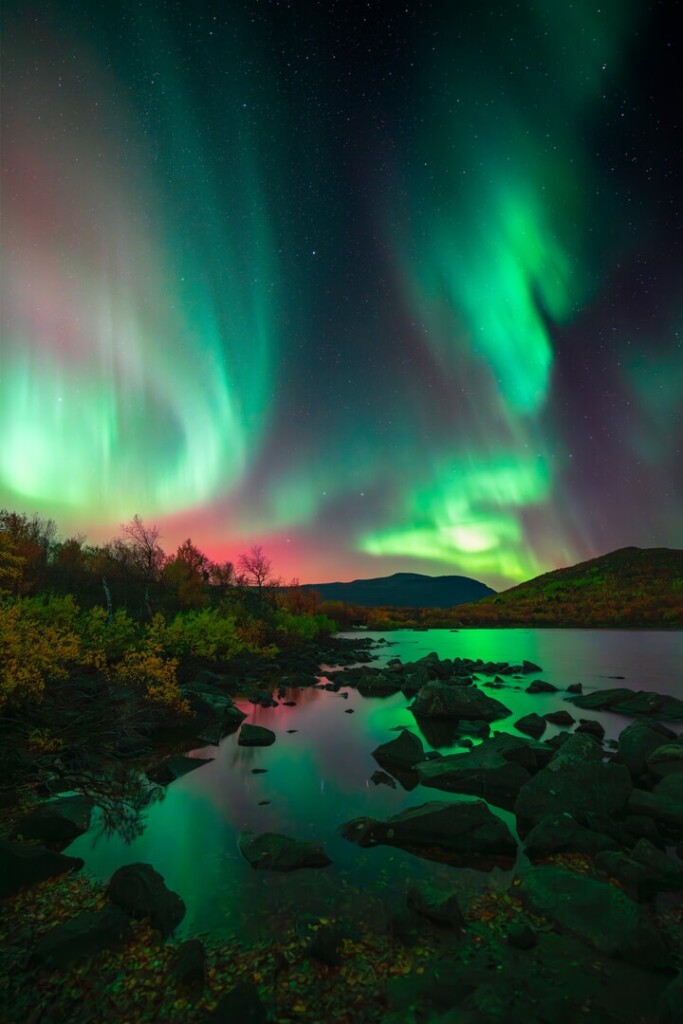
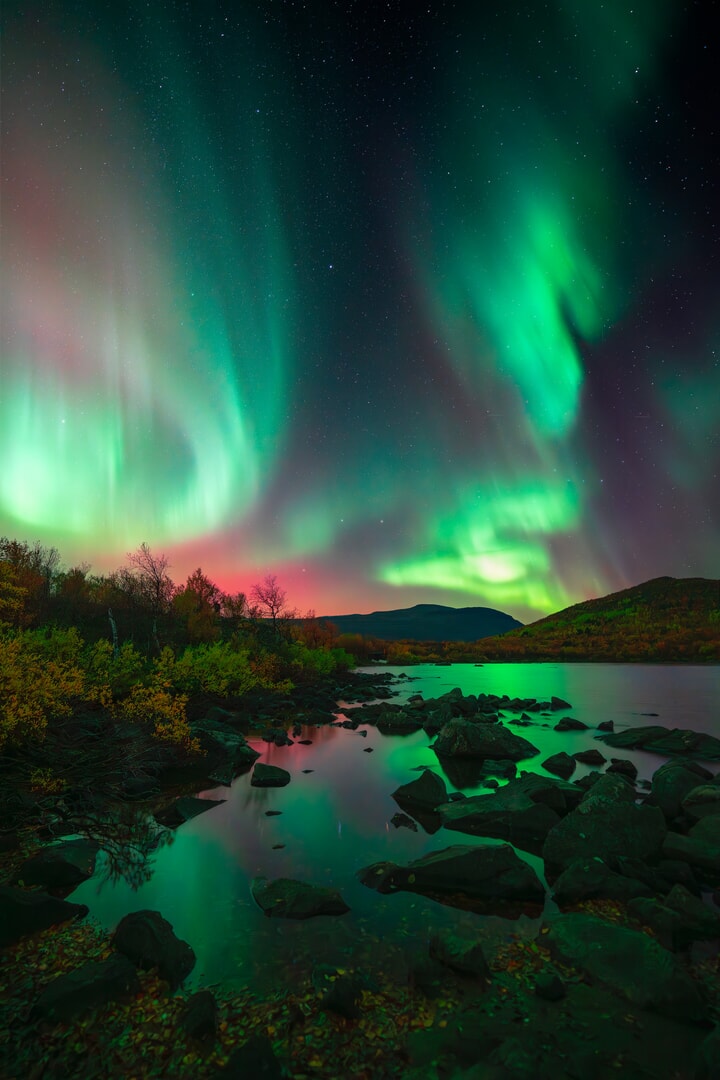
“One Autumn Night” – Jesús Garrido

“One Autumn Night” – Jesús Garrido
- Abisko, Sweden
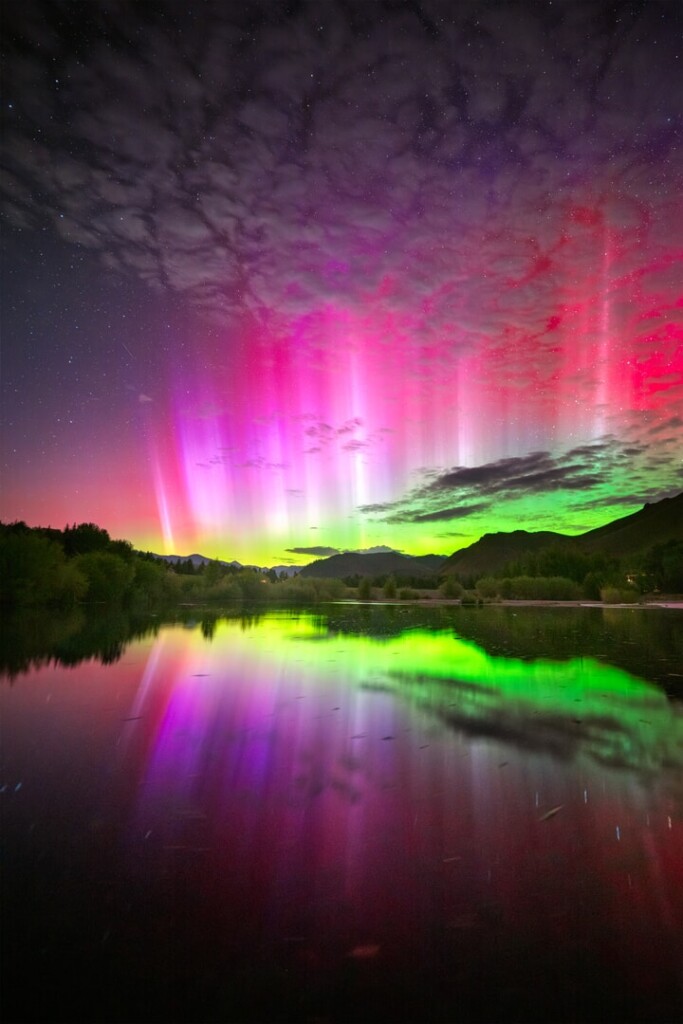
The 1st of October 2025. That night, at the very moment I stepped outside my home, I somehow knew it was going to be a great one. The solar activity was looking really good, and I kept thinking that I had to find some open water to catch those reflections. Soon, the lakes would be completely frozen and covered in snow, so this felt like the right time to look for reflections before winter settled in.
I drove to a little bay of Lake Torneträsk in Abisko, a place I like because it’s usually quiet and protected from the wind. A few moments after arriving, the Northern Lights started to move slowly across the sky, and then suddenly they began to dance. Red tones rose on the southern horizon while the lake remained perfectly still, reflecting every single thing that was happening above me.
f/1,8, ISO 4000, 3.2s
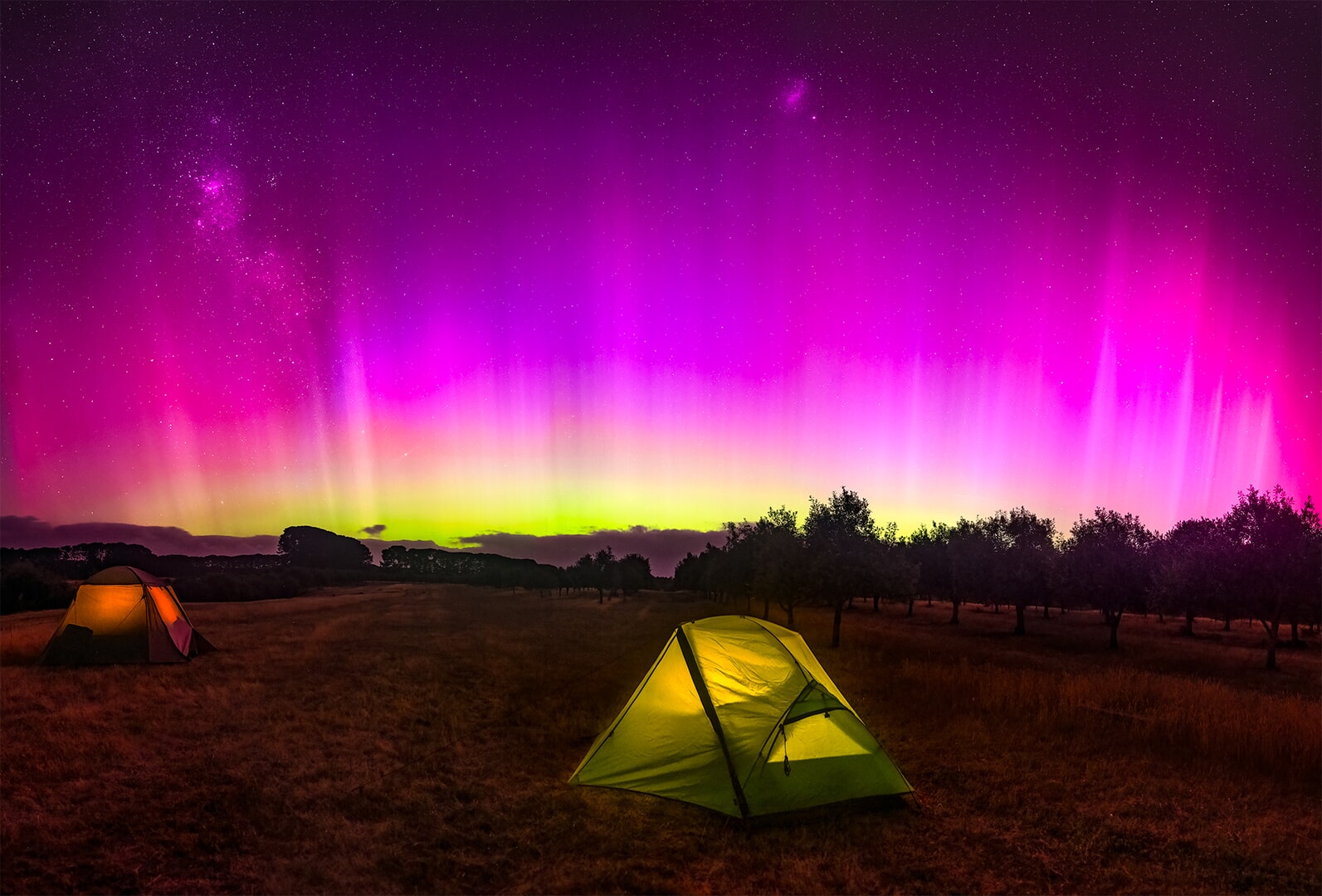
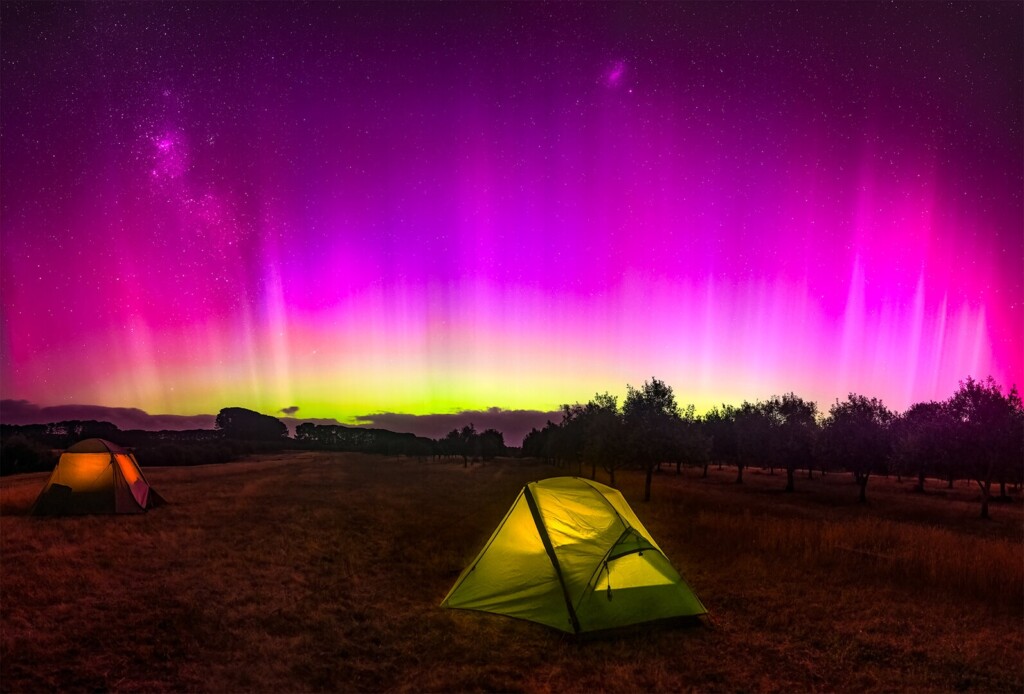
“Celestial Fireworks on New Years” – Sara Aurorae
“Celestial Fireworks on New Years” – Sara Aurorae
- The Otways, Victoria, Australia
On New Year’s Day, beneath the dark Australian sky, my friends and I were met by celestial fireworks with the Aurora Australis unfurling in a sudden, breathtaking bloom above our quiet campsite in the Otways of Victoria. Ribbons of rose, violet, and green shimmered, visible even to the naked eye, as if the universe itself had heard our resolutions for 2025 and joined in our celebration.
The spectacle arrived without warning, giving me only moments to reach for my camera. Though the foreground may be plain, I don’t mind it, as the lines of trees on the right lead your eye to the stunning light show in the sky. This photograph holds something far greater — a reminder that even in life’s simplest scenes, magic can find us when we least expect it.
Panorama: 6 Frames, f/2.5, ISO 1250, 13 seconds
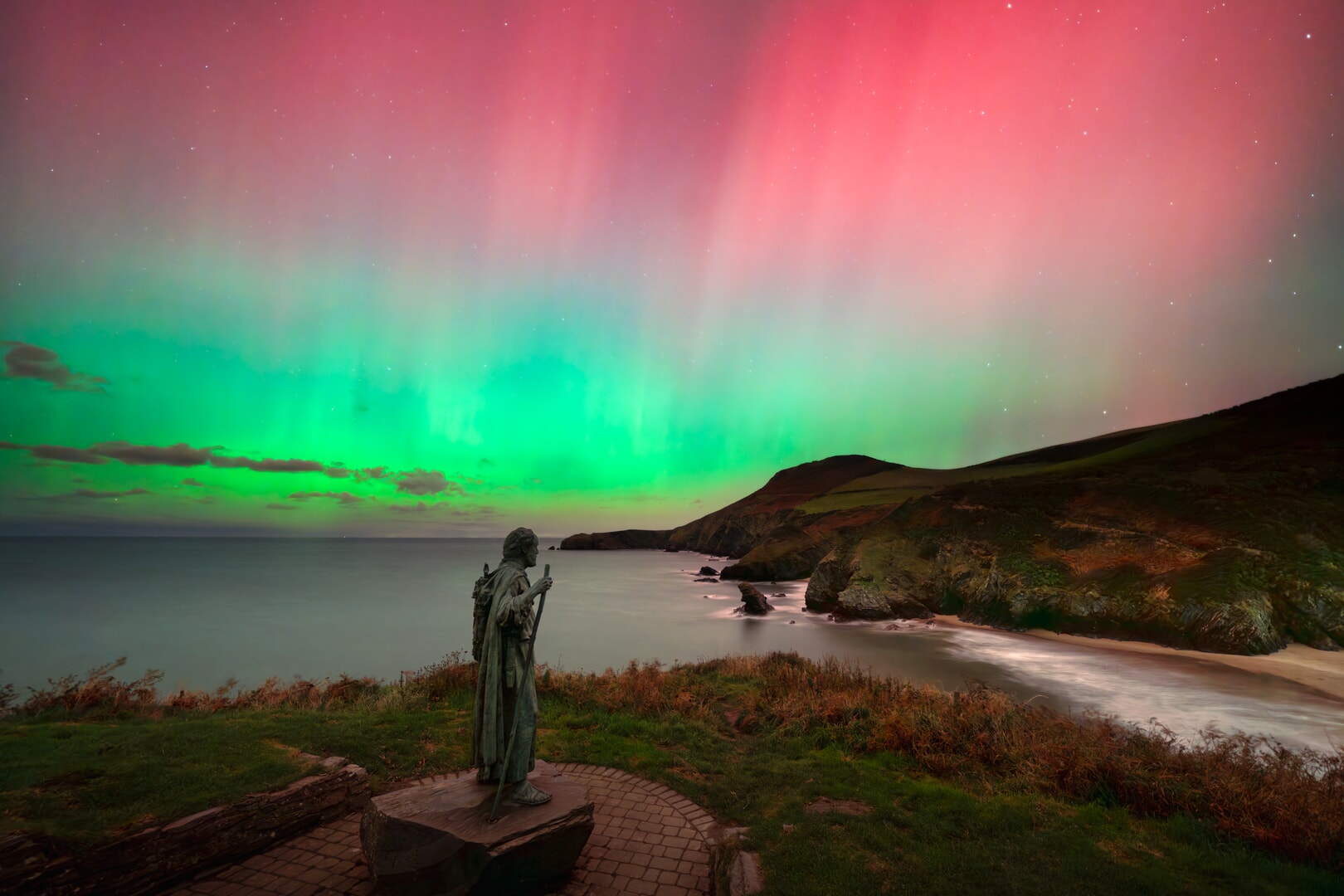
“Llangrannog Aurora” – Mathew Browne

“Llangrannog Aurora” – Mathew Browne
- Llangrannog, Ceredigion coast, Wales
I was overjoyed to capture this otherworldly Northern Lights display on the rugged Ceredigion coast of West Wales. The village of Llangrannog is not known for its celestial displays; it is better known for its beach, dramatic cliffs, and the statue of St. Crannog, who stands watch over the shoreline.
Because sightings of the aurora in this part of Wales are so uncommon (this location lies 52 degrees north), each image I’ve captured is an intersection of preparation, great timing, clear skies, and, of course, a bit of luck. The final image is a wonderful representation of this quaint coastal village, and I love how all the elements came together. Plus, photographing the aurora on my home turf has been a career highlight!
16mm, f/4.0, ISO 3200, 2s
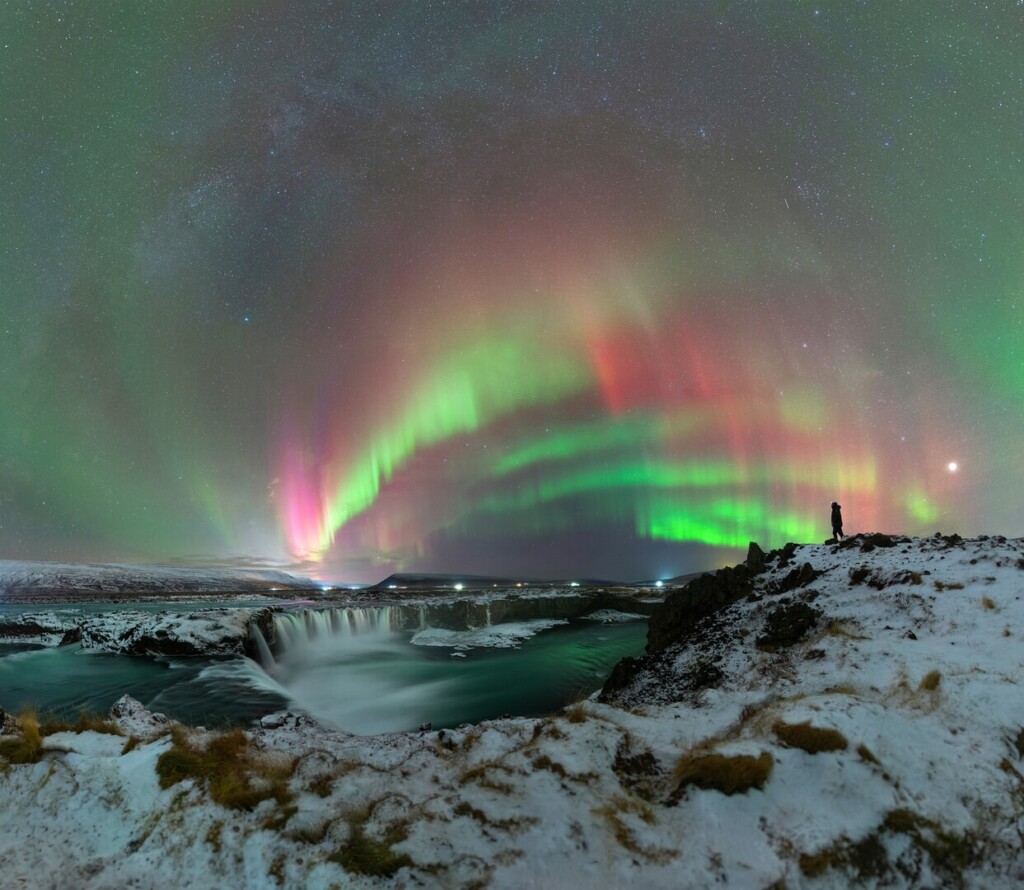
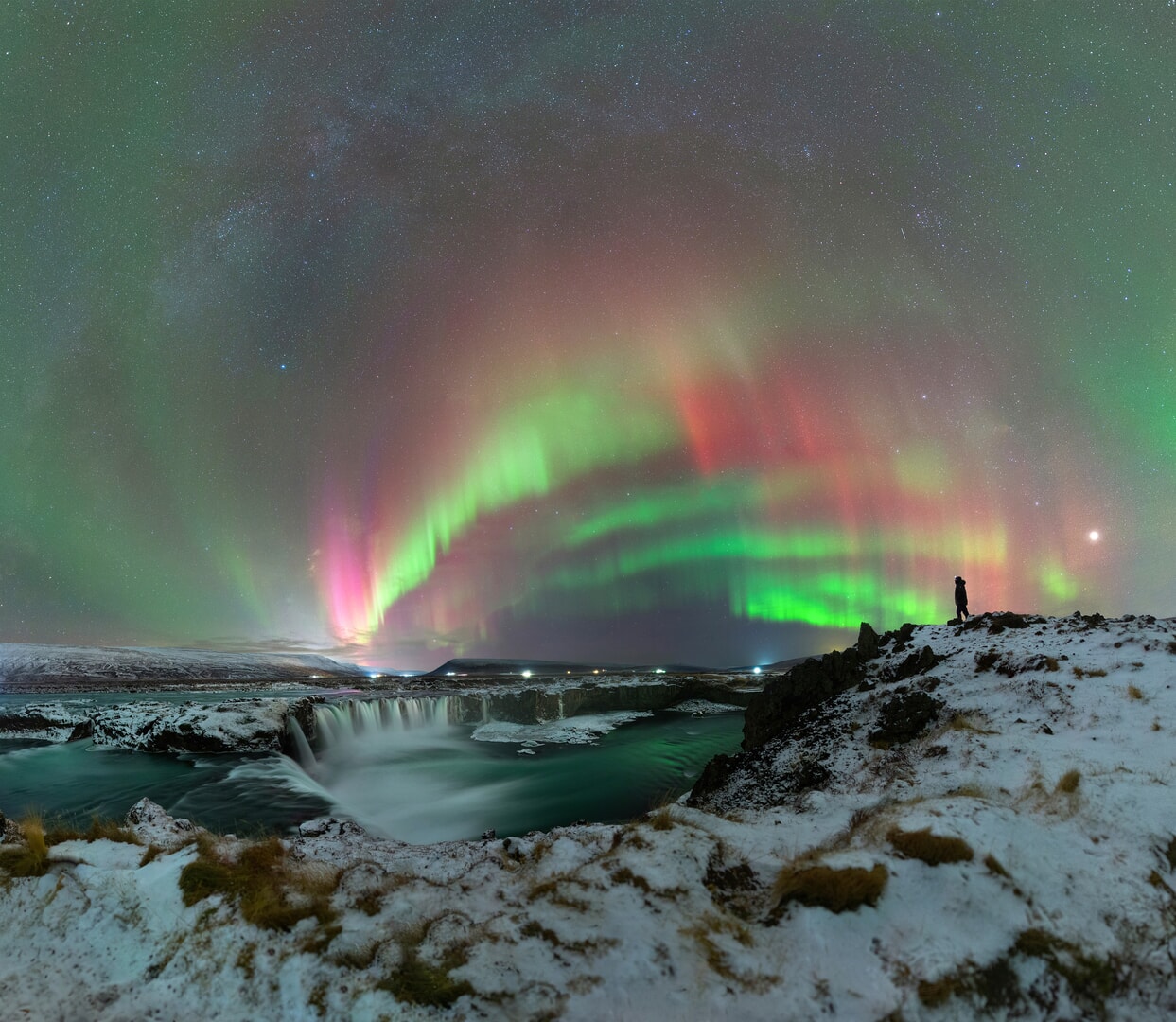
“Aurora Bouquet Above Godafoss” – Martin Giraud
“Aurora Bouquet Above Godafoss” – Martin Giraud
- Godafoss, Iceland
During my trip to Iceland, I traveled from the south to the north. The landscapes changed, and snow covered almost everything. Godafoss is a must-see in northern Iceland, literally meaning “the waterfall of the gods.” In the year 1000, Iceland adopted Christianity, and the idols of the old pagan gods were thrown into the falls. This waterfall is one of the most impressive in the country, making us feel incredibly small in its presence.
We visited the site in the afternoon while there was still daylight to scout the area. Despite promising aurora forecasts, the day was cloudy, and after sunset, the clouds didn’t seem to clear. We took a short break in the van to warm up and wait. Once night fell, a miracle happened: the sky completely cleared up.
We moved as close as possible to the falls, set up our cameras, and almost instantly, the auroras appeared. The colors were different that night, shifting from pink to purple to green.
- Sky : panorama of 20 pictures @ f/1.8, ISO 3200, 3.2s
- Foreground: panorama of 20 pictures @ f/1.8, ISO 4000, 13s
- Canon 6D, astro-modified
- Sigma Art 20mm
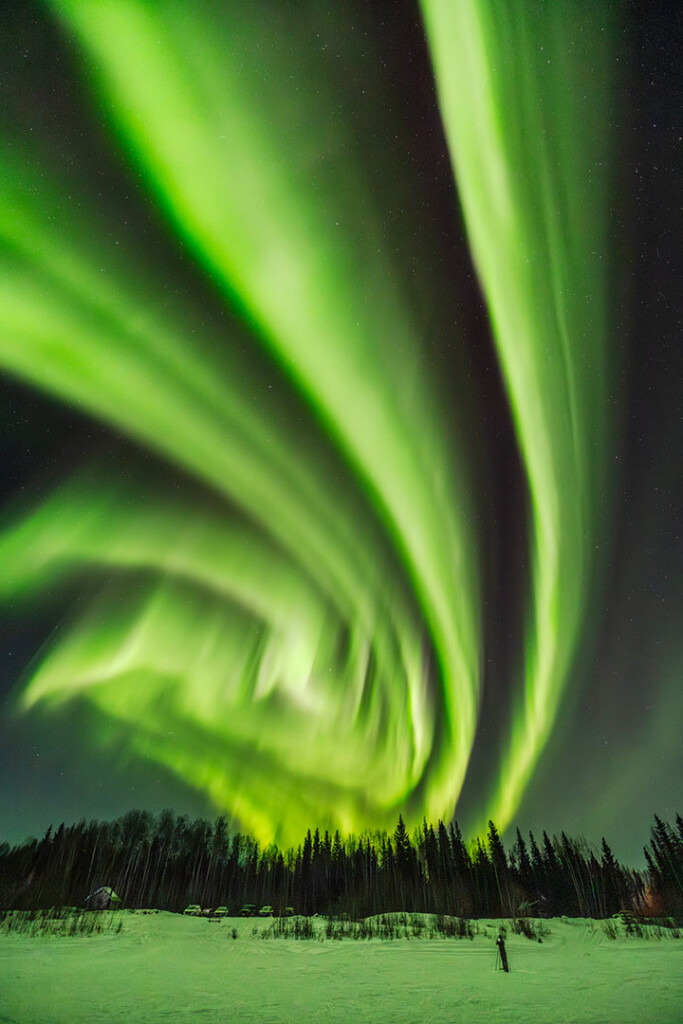
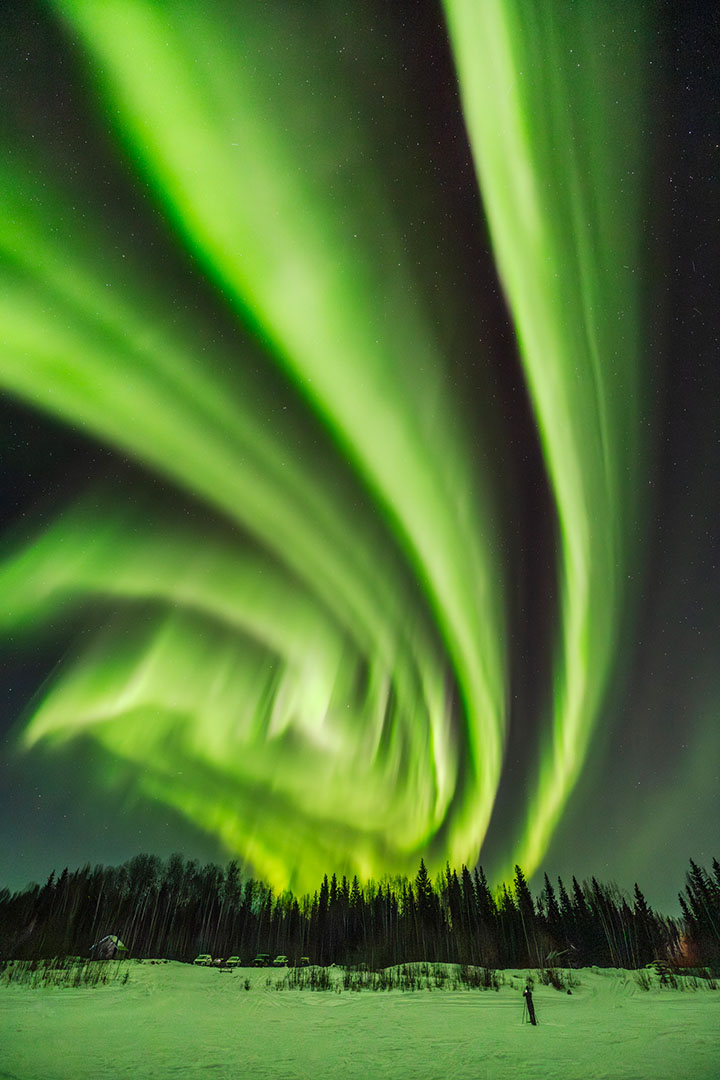
“Auroral Cinnamon Roll” – Marc Rassel
“Auroral Cinnamon Roll” – Marc Rassel
- Fairbanks, Alaska
This night was one that I will be thinking about for a long time. It started just like any other high-latitude aurora, with an arc slowly moving toward the equator and rising overhead. Suddenly, it exploded into one of the most intense auroral displays I’ve ever seen.
The aurora’s charged particles travel along Earth’s magnetic field lines, which aren’t always fixed. In this case, a geomagnetic storm had them twisting, bending, and oscillating across the sky. The lights formed an impressive aerial spiral – it reminded me of a cinnamon roll!
But this show wasn’t just for me – this beautiful light show happened while guiding a mother and daughter who were making a “bucket list trip” to Fairbanks to see the Northern Lights for the first time together. Hearing their raw excitement and joy, and seeing those two experience a moment of pure awe together, made this night that much more special.
f/2.8, ISO 3200, 1.6s
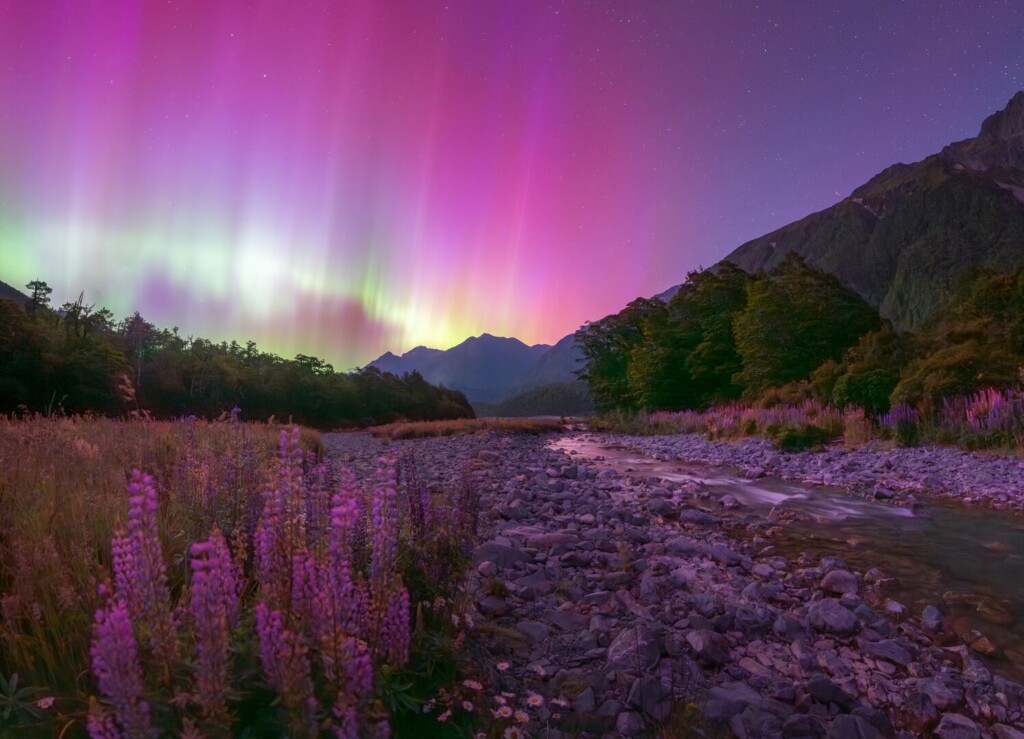
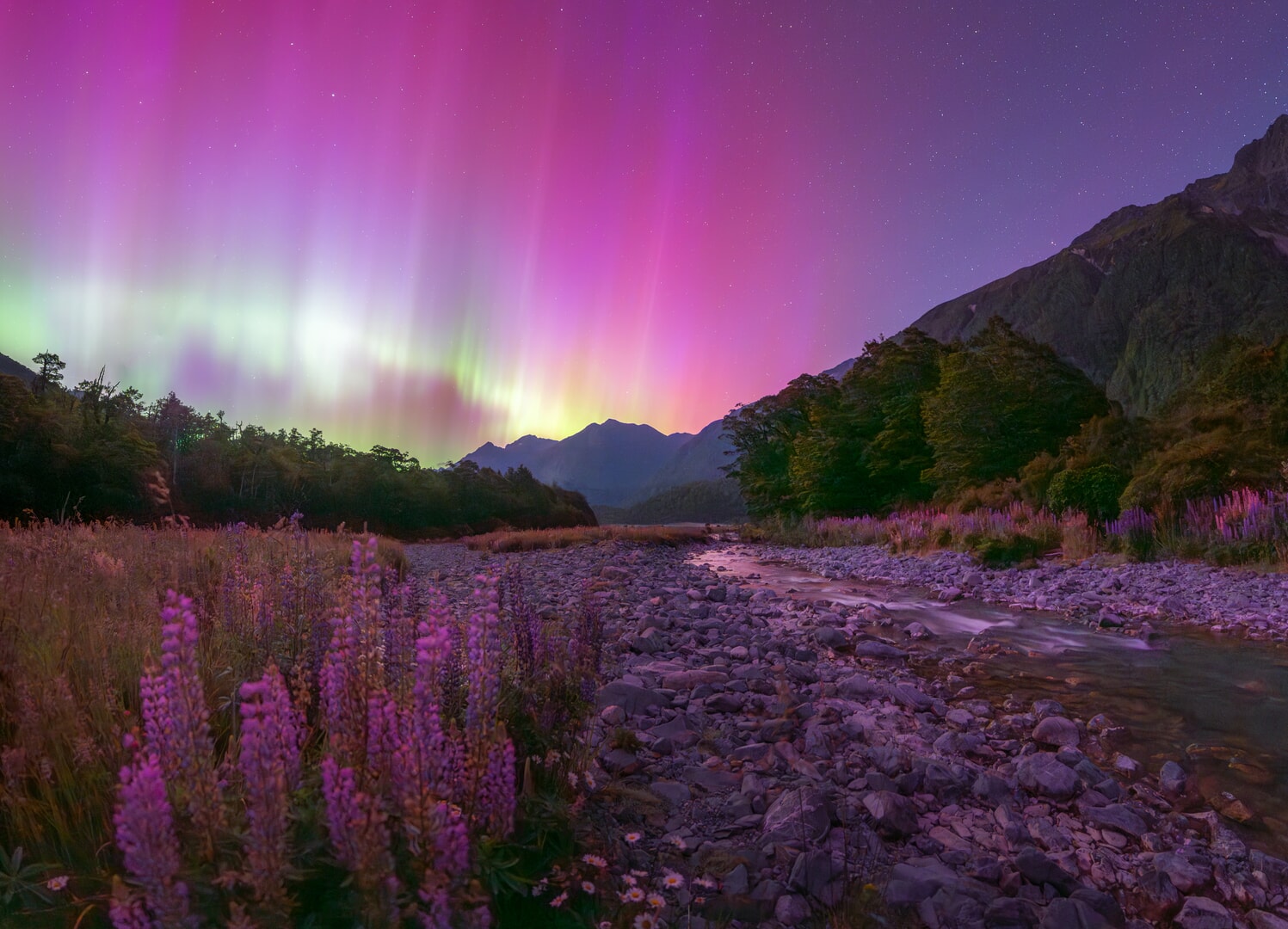
“Fiordland Aurora and Lupins” – Douglas Thorne
“Fiordland Aurora and Lupins” – Douglas Thorne
- Cascade Creek – Fiordland, New Zealand
This was an aurora that just kept on giving all night! I was at Cascade Creek in Fiordland, New Zealand, admiring the natural beauty of the rugged forest, dainty wildflowers, and bubbling stream. I had an idea of getting the purple lupins in the foreground with the Aurora behind, but I didn’t know exactly where the flowers were at the time.
This particular shot was taken at my second location for the night, as my first stop had barely any lupins showing. I spent quite some time walking up and down this area to find this composition, and in the end, it was well worth it. I love how it shows the mountains, creek, forest, and lupins all together with a coherent color scheme. I took six images to create this panorama.
f/2.8, ISO 1600, 8s
“Alone Beneath the Dancing Sky” – Nikola Vukotić
“Alone Beneath the Dancing Sky” – Nikola Vukotić
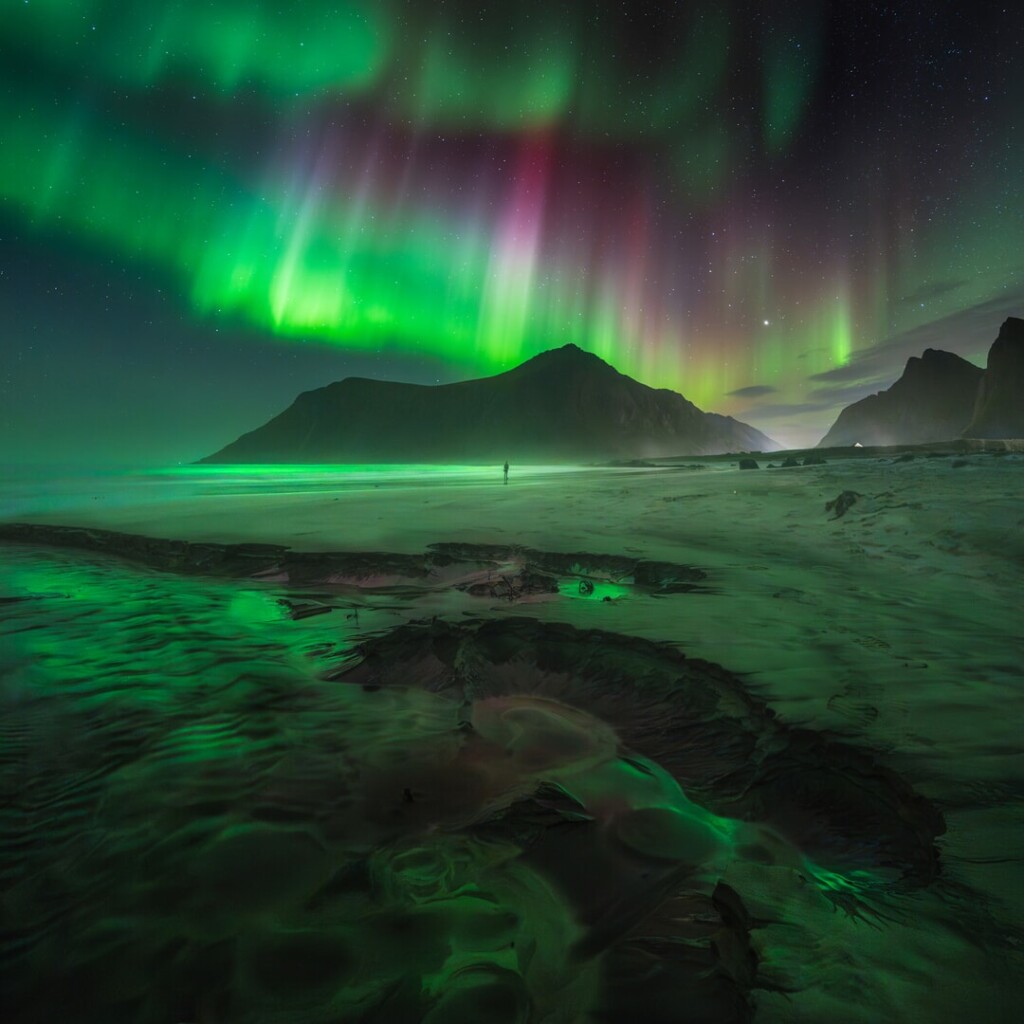
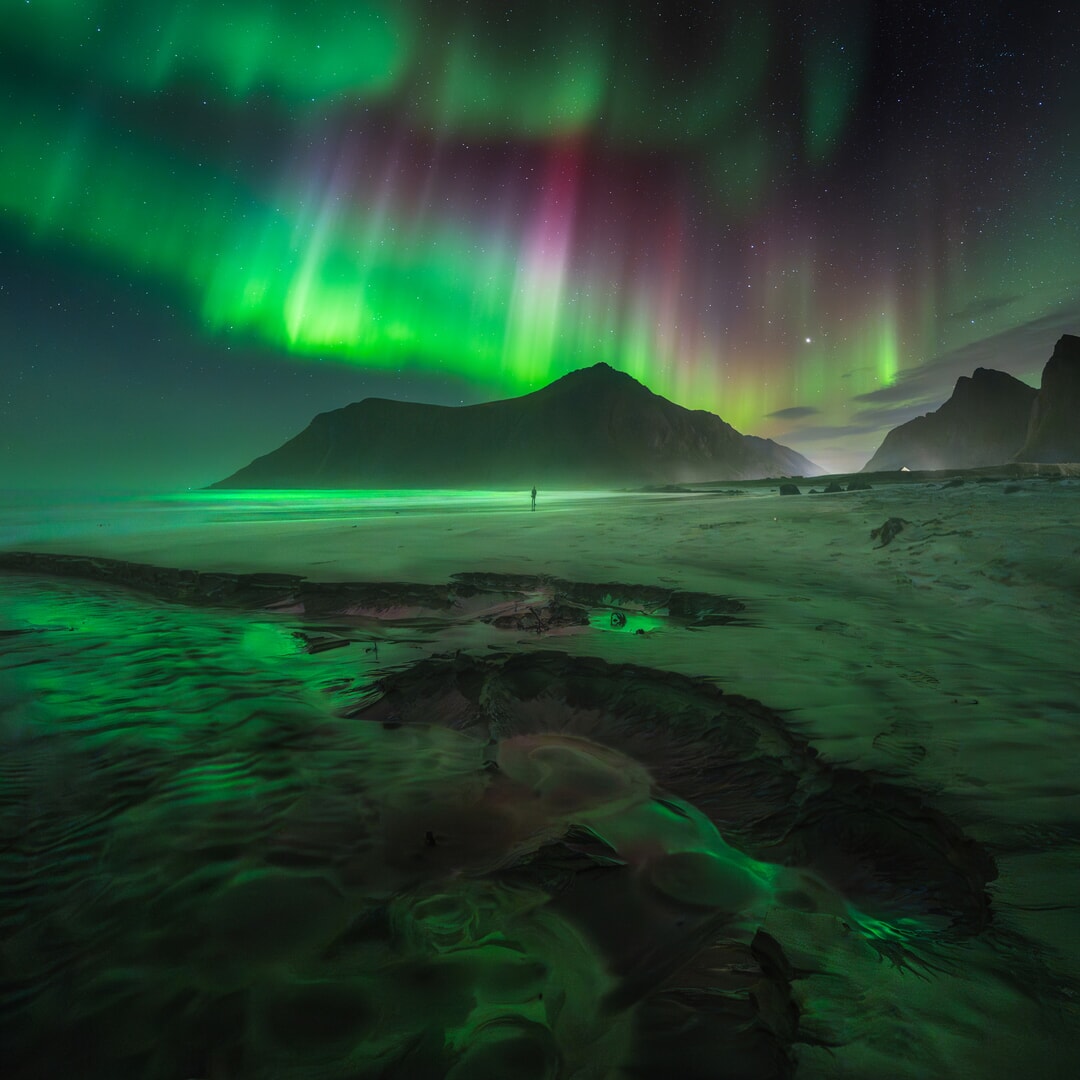
- Skagsanden Beach, Lofoten Islands
This photograph was taken on the second night of my stay in the Lofoten Islands, my very first journey to the far north and the Arctic Circle. The night before, I saw the Aurora Borealis for the first time in my life. Together with my friends and fellow photographers, we could hardly contain our excitement; we felt like children whose biggest dream had just come true.
That evening, I found myself on Skagsanden Beach almost by accident, planning only to capture the sunset. But as the light faded, the sky came alive with color, completely against the forecast that promised only clouds. The aurora danced in shades of green and red, and the beach was almost empty. In one of my frames, I later noticed my friend Luka standing still under the sky, absorbed in the same wonder.
Moments like this remind us that nature doesn’t always follow our plans, and that the best photographs often happen when we simply stay, watch, and let the world surprise us.
- Sky: 16 mm, f/2.8, ISO 3200, 8s
- Foreground: Focus stacking, 2 frames, 16 mm, f/2.8, ISO 3200, 8s
“Auroral Reflections” – Travis D. Amick
“Auroral Reflections” – Travis D. Amick
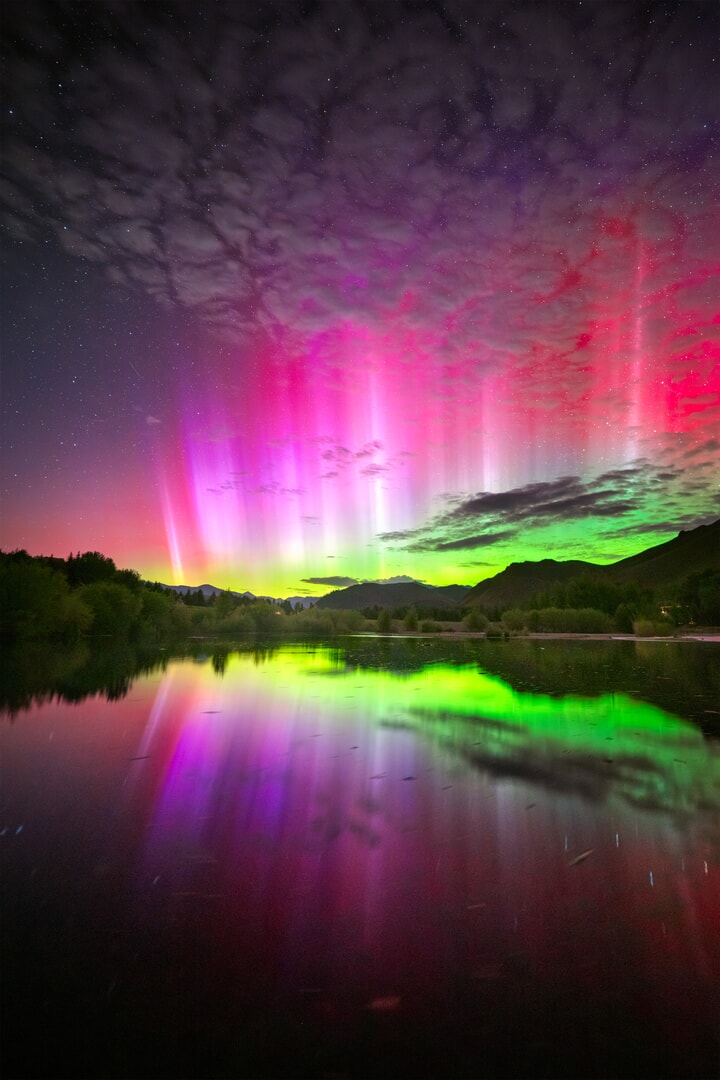
- Ketchum, Idaho, USA
The night commenced with the eagerly anticipated arrival of a large coronal mass ejection (CME) destined to impact Earth. CMEs, a primary cause of significant aurora displays, serve as an excellent catalyst for the aurora to be observed in lower latitudes, particularly during substorms, which are brief “bursts” of heightened auroral activity.
The notification of a CME impact came ringing in much earlier than expected from SpaceWeatherLive. I was well prepared and quickly headed out to a secluded pond just north of Ketchum, Idaho. After the initial impact, time seemed to slow down, and only a faint auroral glow was present on the horizon. I was ready to throw in the towel when suddenly, there was an explosion of color and the brightest naked-eye red flares I’ve ever seen.
I ran down to the pond to get this particular shot of the vibrant red flares intertwined with the colors of the aurora reflecting off the tranquil pond. Within minutes, the substorm subsided, and the aurora once again receded to just a glow on the horizon. The aurora demands patience and meticulous planning, but it’s worth it for those fleeting moments of awe.
Single shot, 14mm, f/1.8, ISO 2000, 8s
“A Cathedral of Green Light Rising Over Skógafoss” -Victor Lima

“A Cathedral of Green Light Rising Over Skógafoss” – Victor Lima
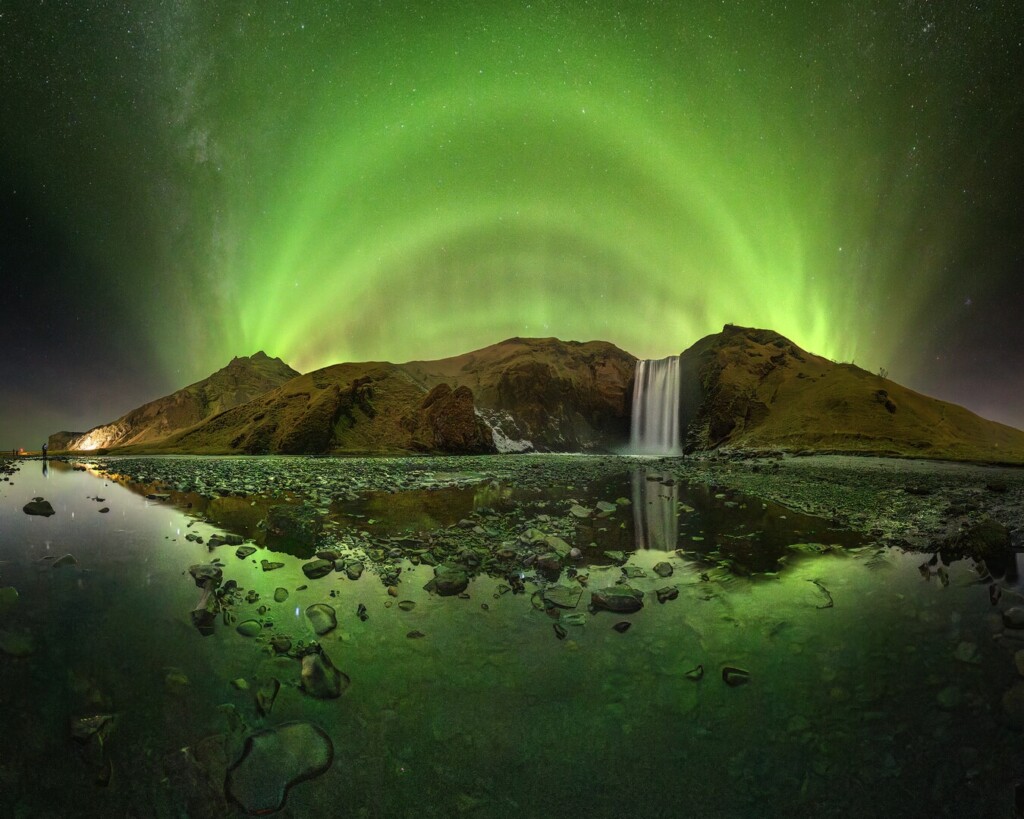
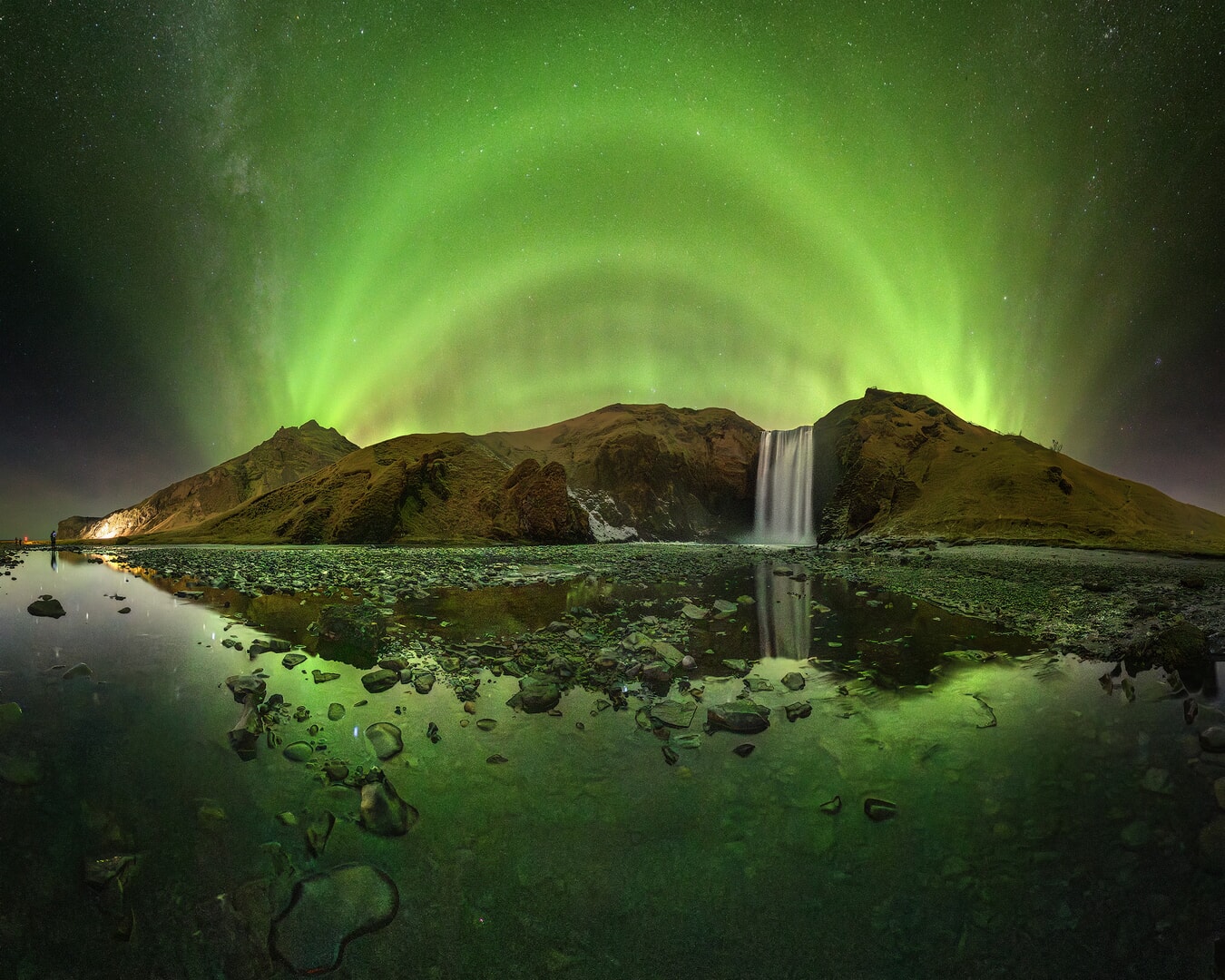
- Skógafoss, Iceland
On nights like this, Iceland feels otherworldly. The aurora unfolded in perfectly layered arcs, painting the entire valley with shades of emerald while the waterfall echoed under the glow. The reflection on the frozen shallows completed the symmetry, making the whole landscape look like a portal to another world.
It’s impossible to stand here and not feel the power of nature.
When you’re standing before this waterfall, your first impulse is to focus on it, using focal lengths around 20mm. However, when I observed the scene, I noticed that the Aurora Borealis was forming arcs aligned with the mountains surrounding the waterfall, so I opted to take a panoramic image using a 12mm fisheye lens to reduce the number of images needed to cover the entire scene. I also chose to take advantage of the stream formed by the waterfall to capture the reflection of the landscape and the sky, thus adding more complexity to the composition.
Wearing waterproof boots, or at least what should have been, I entered the watercourse, set up my tripod very low, and took the sequence of images to assemble the panorama later.
Panoramic shot, 10 shots, f2./8, ISO 5000, 15s
“Veni, Vidi, Vici” – Marina Prol

“Veni, Vidi, Vici” – Marina Prol
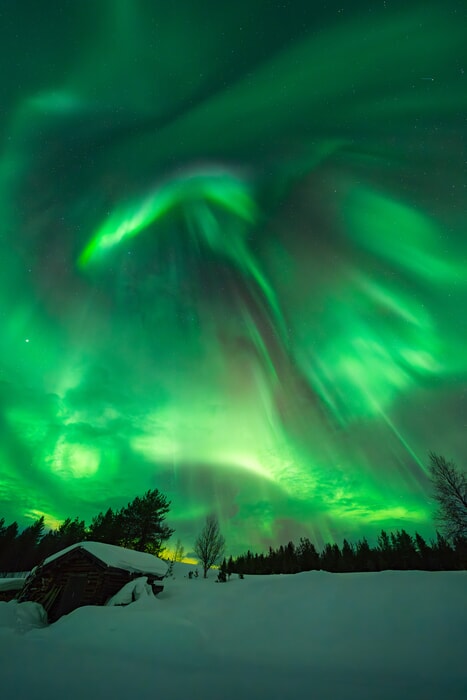
- Lapland, Finland
Veni, Vidi, Vici. I came, I saw, I conquered.
That’s what I thought on my first night in Lapland, Finland, on 19 February 2025. After waiting so long for this moment, seeing my first Aurora Borealis like this honestly left me speechless. The colors, the dance, and just the sheer beauty— I was so overwhelmed that I didn’t even feel the -18ºC!
The small cabin provided a cozy element to an otherwise frozen landscape and added some visual interest. Of course, the star of the show was the Northern Lights – late to the party, but arriving in style! The night opened like a curtain of green fire, and for a moment, it felt like we were living in an enchanted fairytale.
I was thrilled that I was able to “conquer” this image on my very first night in the Finnish Lapland!
Single exposure, f/2.8, ISO 3200, 3.2s
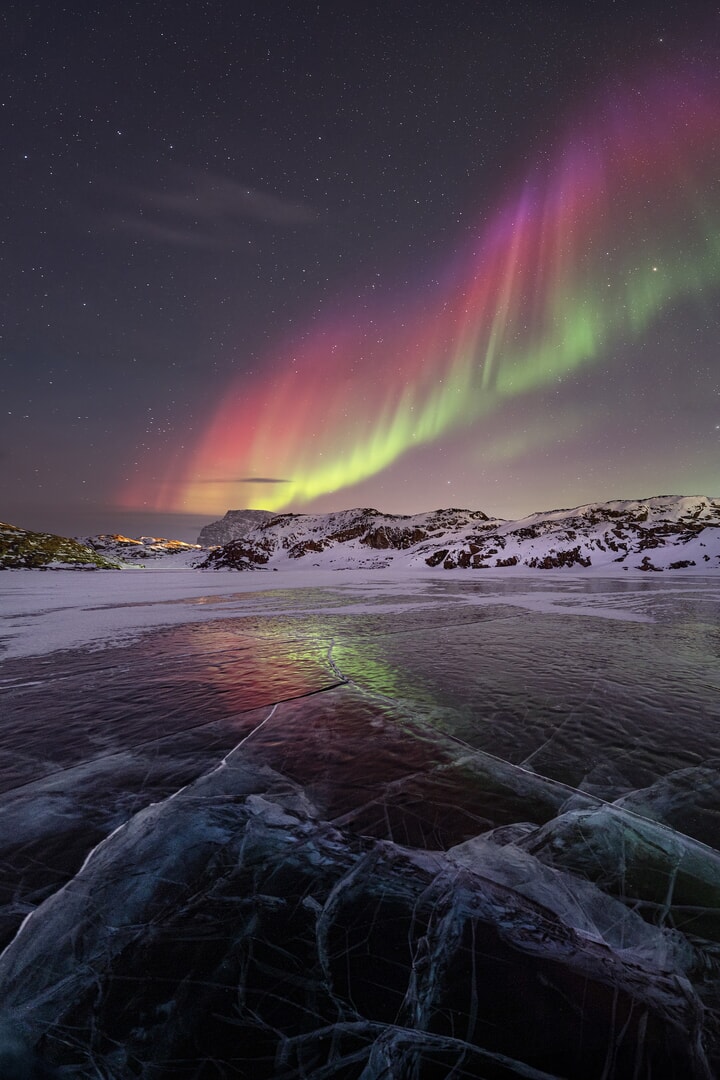
“Northern Lights Over North Greenland” – Ollie Taylor

“Northern Lights Over North Greenland” – Ollie Taylor
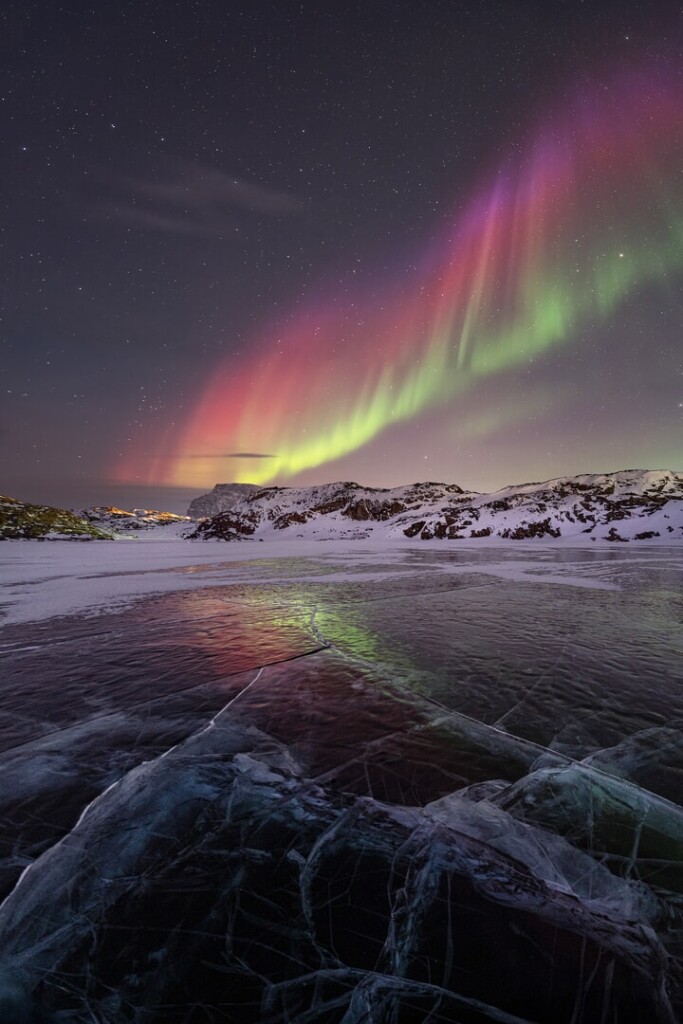
- Arctic Circle, Greenland
After several bitter February days of cold and wind, this lake deep in the Arctic Circle, in Greenland, usually covered in snow at this time of year, was revealed alongside the incredible structures left in the ice after it froze. The lake becomes frozen solid by mid-winter, and you can trace the ice bubbles and formations into the depths, safely walking on any part of the lake due to the thickness of the ice sheet.
After waiting a few hours and figuring out compositions, a small band of colourful Aurora lights danced across the sky, displaying vibrant purples in perfect alignment with my composition. This photograph captures the scene so well – the thick, textured ice sheets and the bright greens and reds highlighted by the purple tones of the starry sky.
- Foreground: f/2.8, ISO 500, 20s (moonlit)
- Sky: f/2.8, ISO 3200, 4s
- Sony A7III, astro-modified
- Sony 14mm f/1.8
- Gitzo tripod
- RRS ball head
I hope you found these images inspiring and that they encourage you to go out and have incredible adventures shooting the Northern Lights.
If you’re interested in photographing the aurora, some technical knowledge is key, and the best way to prepare your shots is by downloading our Northern Lights photography guide, which will help you capture the “green lady.”
GET YOUR FREE EBOOK!
– PHOTOGRAPHING THE NORTHERN LIGHTS –
BEST SETTINGS, GEAR, PLANNING, TIPS, AND MORE!

Also, don’t forget that camera gear for shooting the Aurora and the best settings in Northern Lights photography are important.
Thank you for sharing this article with others who might find it inspiring.
About Dan Zafra and the Curation Process Behind the Northern Lights Photographer of the Year
Created by Dan Zafra in 2018, the Northern Lights Photographer of the Year is an annual collection showcasing the 25 most exceptional Aurora images captured worldwide over the past year. Each photograph is meticulously chosen from thousands of submissions based on the uniqueness of the location, the story behind the shot, technical excellence, strong composition, and authenticity—favoring images where the Aurora and foreground were captured in the same place and time.
As a renowned astrophotographer who has captured night skies around the globe, leading astro workshops in diverse locations, and teaching advanced night photography techniques through Capture the Atlas, Dan Zafra brings deep expertise and a discerning eye to this selection.
Over the years, this project has grown into a leading reference for Northern (and Southern) Lights chasers and major media outlets worldwide. Yet beyond celebrating extraordinary imagery, its mission remains steadfast since its inception: to inspire a deeper appreciation of our night skies and advocate for urgent efforts to preserve them for future generations.
Below is a gallery with all the images at their full size. Enjoy it!
Please do not download, copy or share any of the photos here without the author’s prior written permission. Consider the photos here to be protected by copyright. If anyone uses any of the photographs we will take the required legal actions.